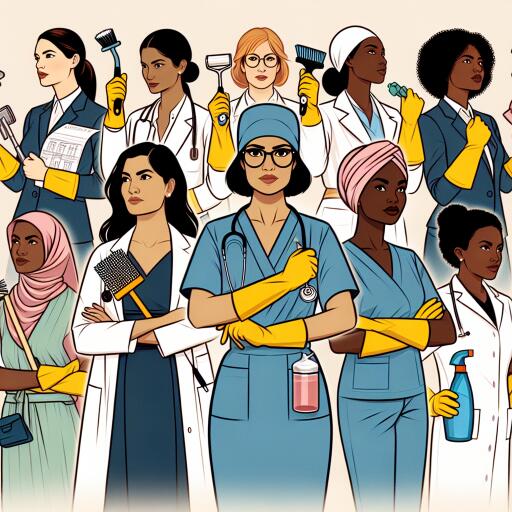
More than maids
Dubai’s glittering skyline, diverse neighborhoods, and fast-paced economy continue to draw migrants seeking new opportunities. Among them are Ethiopian women, often portrayed in a narrow light as domestic workers confined to private homes—out of sight and vulnerable. While domestic work remains a significant pathway, it is far from the full story. Across the city and the wider United Arab Emirates, Ethiopian women are carving out varied careers, building businesses, and contributing to the country’s evolving urban culture.
Beyond a single narrative
The common assumption that Ethiopian women in Dubai are “only maids” overlooks the breadth of roles they occupy. From hospitality and retail to professional services and entrepreneurship, many are moving beyond traditional expectations. Recognizing this complexity matters: it acknowledges skill, ambition, and agency—and highlights how migrant communities shape the city’s social and economic fabric.
Visible in the city’s everyday life
Walk through Deira and it’s hard to miss Ethiopian-owned coffee houses, where the aroma of freshly roasted beans mingles with the city’s nighttime energy. Restaurants serving injera and traditional stews, as well as beauty salons offering specialized hair and skin care, are part of a lively landscape found not only in Deira but across Dubai—and in other Emirates such as Sharjah and Abu Dhabi. These spaces are more than businesses; they are cultural anchors, hubs for community support, and places where new arrivals learn the rhythms of the city.
Entrepreneurship and small business leadership
Many Ethiopian women are entrepreneurs or managers, navigating supply chains, hiring staff, and balancing books. Their enterprises—cafés, salons, boutiques, retail outlets—generate jobs and serve diverse clientele. These businesses often bridge markets, linking producers and artisans in Ethiopia with customers in the UAE, and they contribute to a transnational economy through trade and remittances.
Professional pathways in a diversified economy
Dubai’s economy, rooted in trade, tourism, aviation, financial services, and real estate, offers professional avenues that increasingly include African talent. Ethiopian women can be found in customer relations, logistics coordination, accounting support, human resources, cabin crew, sales, and brokerage roles. Some arrive with degrees and professional experience; others upskill through vocational training, language courses, and industry certifications. In all cases, mobility is possible when skills, networks, and perseverance come together.
Community networks and resilience
Behind individual success stories lie strong support systems. Informal networks—friends, neighbors, community groups, and faith circles—help newcomers find housing, jobs, and reliable information. Mentorship from established business owners and professionals can open doors, while online groups provide job leads and practical advice. These ties are crucial in a fast-moving city where opportunities can appear and vanish quickly.
Navigating challenges
Real obstacles remain. Visa rules, sponsorship arrangements, and the high cost of living can limit choices and create vulnerability, especially for those in low-wage work. Long hours and shared accommodations are common. When employment relationships sour, workers may feel isolated. This is why visibility and accurate information are essential—so migrants know their rights, seek assistance when needed, and access pathways to safer, more stable work.
Why recognition matters
Seeing Ethiopian women as more than domestic workers reframes how we understand migration, gender, and work in the Gulf. It acknowledges contributions that range from cultural hospitality to boardroom strategy, from microenterprise to multinational teams. This fuller picture not only enriches the city’s story but also supports more inclusive policies and practices—ones that reward skill, protect dignity, and enable upward mobility.
A broader horizon
Dubai will continue to attract those ready to hustle, learn, and build. Ethiopian women are part of that momentum: entrepreneurs, professionals, students, and yes, domestic workers too—often using one role as a stepping stone to the next. The city’s promise is not the same for everyone, but the paths are wider than stereotypes suggest. Recognizing this diversity is a first step toward ensuring that opportunity, safety, and respect extend to all who call the Emirates home—even for a while.