Theo Baker spent four years investigating Stanford. Before he leaves, here’s what he found. | TechCrunch
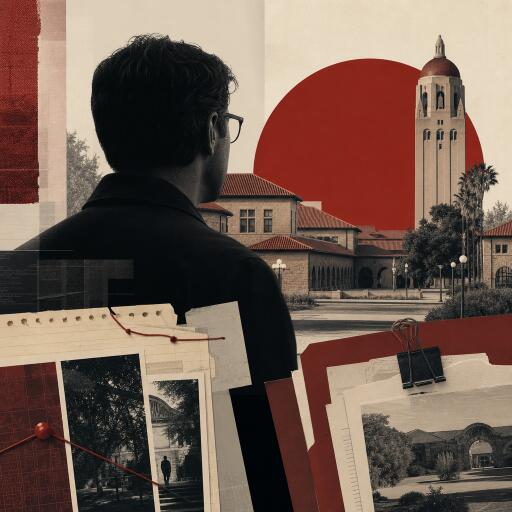
Most students arrive at Stanford hoping to launch brilliant careers. Theo Baker largely did it during his first semester. As a freshman, he reported on research irregularities tied to then–Stanford president Marc Tessier-Lavigne, coverage that culminated in the president’s resignation and earned Baker one of journalism’s top honors. Now, with graduation around the corner, he’s publishing “How to Rule the World,” a sweeping chronicle of Stanford’s entanglement with Silicon Valley power and the quiet systems that sort the future elite.
From coder to campus watchdog
Baker came to Stanford planning to code and build. He jumped into hackathons, advanced computer science classes, and the startup scene. But he also joined the student paper to honor his late grandfather, who loved journalism. Tips soon started coming in, leading him to a forum where scientists dissect published research. There, he found years-old comments questioning images in papers co-authored by Stanford’s president. What began a month into his freshman year ended with a resignation before his sophomore fall.
Warnings, pushback, and a conflict-laced investigation
Early on, Baker was urged to drop the story. He was told the president’s reputation was unimpeachable and that challenging him would be socially and institutionally costly. After his first article, Stanford’s trustees launched an inquiry, while voicing confidence in the very integrity under review. Baker’s reporting raised questions about potential conflicts of interest among those overseeing that process. As scrutiny grew, he says faculty received messages dismissing his work and he began hearing more from attorneys. The thrust of his book: truth-seeking can collide head-on with power, especially where academic prestige and venture money intersect.
The “Stanford inside Stanford”
Baker describes a parallel campus reality that snaps into focus once you know where to look. In this inner ring, a handful of students are marked early as the next transformative founders and ushered into rarefied rooms: off-campus parties on yachts, discretionary funds, and group chats where billionaires respond on weekends. As Stanford’s startup mystique has grown, it’s also become harder to distinguish signal from noise. A shadow sorting mechanism has emerged to separate the headline-chasing “wantrepreneurs” from the small set of builders investors believe can bend markets.
A secret seminar with a telling name
The book’s title isn’t just branding; it’s also what students called a not-for-credit, invitation-only seminar on campus, led by a high-profile tech executive. It wasn’t listed in the catalog, but it offered lectures, discussions, and carefully curated guest speakers each winter. Simply knowing it existed conferred status. The draw, according to students Baker interviewed, was access: a chance to be in the room with the peers and patrons who could accelerate a career before it officially began. The seminar became a symbol of a broader phenomenon—how mentorship can shade into talent extraction when incentives are misaligned.
How scouting really works
Beneath the surface, Baker reports, investors deploy upperclassmen to identify promising freshmen as soon as they arrive, steering them into private groups and away from splashy clubs that can be read as performative. Relationships are the currency: getting quietly “tapped” matters more than any résumé line. He recounts dinners where money and power are presented with startling nonchalance—like a CEO musing about past clients while spooning caviar to an infant. These stories, he argues, hint at how spectacular failures happen: enormous sums and authority flow to teenagers with little structure for accountability when things go sideways.
From crypto fever to the AI gold rush
Baker’s cohort arrived at the end of the crypto boom. Within weeks, a major exchange crashed and a flagship founder fell. Then generative AI burst into public view, and everything pivoted. The same evangelists who had championed tokens began to chase foundation models and agents. Baker recalls hearing that the prior wave was “directionally right,” just encumbered by legal landmines—sentiment that quickly migrated to AI with fresh fervor. Silicon Valley cycles are nothing new, he notes, but the speed and scale of this shift felt unprecedented from inside the campus epicenter.
When entrepreneurship becomes the default
This wave has amplified the value of scarce talent while eroding some entry-level roles. On campus, a common refrain emerged: it may be easier to raise a seed round than to land a summer internship. Entrepreneurship, once framed as the outsider path, now doubles as an expected one. That pressure, Baker suggests, alters motivations. Building something meaningful and serving a market you understand is one thing; chasing a trend because it’s the fastest route to status is another. The distinction often shows up later—sometimes in headlines.
Advice for the next class
For students heading to elite schools, Baker’s counsel is simple: interrogate your motives. Are you following a path because it aligns with who you are, or because it’s the default in your environment? Fads and funnels are powerful. So is the satisfaction of choosing differently. The founders he most admires act from conviction, not just ambition. Money can be a byproduct; purpose has to be the driver.
What’s next for Baker
He arrived expecting to start a company. He’s leaving with a book and a deep commitment to reporting. Journalism, he says, isn’t merely a job but a disposition—a way of moving through the world, testing claims against evidence, and staying with a story until its true shape emerges. Whatever comes after graduation, that instinct will guide it.
“How to Rule the World” is both a campus chronicle and a mirror for the tech industry: a reminder that the pipelines minting tomorrow’s leaders are also shaping their values today. In Baker’s telling, the strongest signal isn’t the yacht or the secret seminar. It’s whether someone still asks hard questions when it would be easier not to.