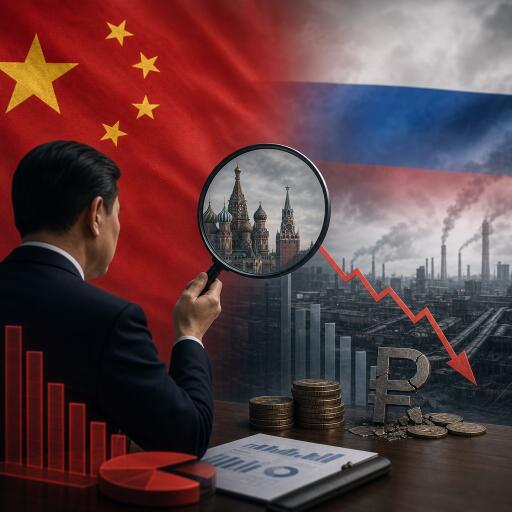
The Chinese agency assessed the state of the Russian economy
A major Chinese rating agency has characterized Russia’s economy in 2025 as showing signs of fatigue, while affirming the country’s credit profile. The overall message: Russia retains notable resilience thanks to the size of its economy, but faces slower growth under tighter financial conditions, persistent inflationary pressures, and softer external trade.
Ratings and outlook
The agency maintained Russia’s long-term ratings at BBBi+ in the national currency and BBBi- in foreign currency, with a stable outlook. It assessed overall credit risk as moderate, noting the economy’s ability to absorb shocks, yet also its sensitivity to adverse changes in the global and domestic environment.
Scale and resilience
Russia’s nominal GDP in 2025 was estimated at roughly 2.6 trillion dollars, placing the country around eighth globally. This scale provides a buffer that supports macroeconomic stability and helps mitigate the impact of external shocks.
Growth dynamics and headwinds
Despite that cushion, the agency reported a marked loss of momentum. Economic growth dropped by an estimated 3.9 percentage points to about 1 percent, lagging the average of similarly rated peers. Three factors were highlighted as key headwinds: elevated interest rates that restrain credit and investment; ongoing inflationary pressures that erode real incomes and complicate policy; and weakening foreign trade that narrows external demand and limits supply-chain support.
Short‑term factors behind the early‑year dip
According to the head of the Bank of Russia, the 1.8 percent decline in GDP seen in January–February reflected exceptional short-term disruptions. Unusually severe frosts and snowfalls caused temporary shutdowns in parts of the economy, while businesses and households were also adjusting to tax changes. These factors, while notable, were described as transitory rather than structural.
Policy and outlook
Maintaining the stable outlook signals that, in the agency’s view, Russia’s credit fundamentals remain balanced between strengths and risks. On the supportive side are the economy’s size, policy capacity, and demonstrated ability to operate under constraints. On the challenging side are tight financial conditions, inflation management, and a less favorable external backdrop.
Looking ahead, the trajectory will likely hinge on the speed at which inflation moderates, the timing and scale of any rate adjustments, the durability of domestic demand, and the evolution of trade channels. If price pressures ease and financing conditions normalize, growth could stabilize from current low levels. Conversely, prolonged tightness in credit and weaker external demand would keep expansion subdued, even as overall credit risk remains moderate under the affirmed ratings.