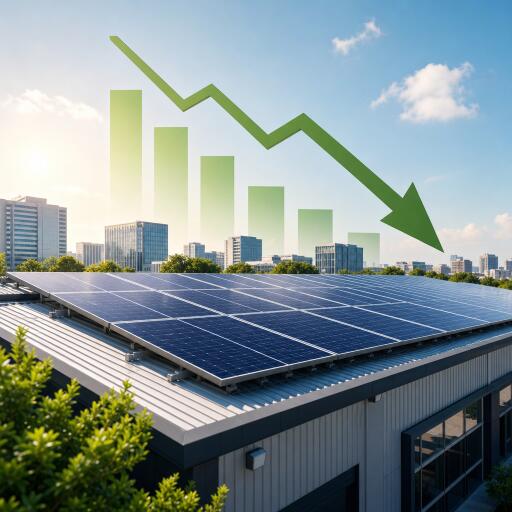
Businesses turn to solar to cut energy costs
Across Nigeria, more businesses are turning to solar energy to cut operating costs, stay productive during grid outages, and build long-term resilience. As diesel and petrol prices rise and generators become more expensive to run and maintain, solar is emerging as a practical alternative that delivers measurable financial and operational benefits.
Why companies are switching
Unreliable grid power forces many firms—especially small and medium enterprises (SMEs)—to rely on generators, driving up expenses and limiting growth. Solar systems, paired with inverters and batteries, are helping businesses stabilize their energy supply, reduce downtime, and protect sensitive equipment from power fluctuations.
Evidence of savings and growth
Recent studies highlight the economic payoff of going solar:
- SMEs in Northern Nigeria reported energy cost reductions of 20–30 percent and income growth of 15–25 percent after adopting solar solutions.
- A survey of 700 micro, small, and medium enterprises (MSMEs) across Lagos, Kano, and Ondo found higher monthly incomes, lower electricity expenses, and improved operational reliability among solar users.
Business owners in the Federal Capital Territory say solar power helps them keep operations running during outages, preserve perishable goods, extend business hours, and improve customer service—all of which directly support revenue growth and competitiveness.
Productivity and resilience advantages
- Longer operating hours: Reliable power extends trading time and service availability.
- Reduced spoilage: Cold-chain businesses maintain refrigeration without interruption.
- Lower maintenance: Fewer breakdowns and less frequent equipment servicing than with generators.
- Predictable costs: Solar reduces exposure to fuel price volatility and supply disruptions.
Job creation and market growth
The expanding solar market is generating jobs in installation, maintenance, sales, and technical support. It is also attracting new investment into local assembly, distribution, and after-sales service networks. As adoption broadens, demand for trained technicians and quality-assured components continues to rise, supporting a growing ecosystem around renewable energy.
Balancing local manufacturing with affordability
Stakeholders broadly support the goal of increasing local solar manufacturing to strengthen supply chains and create jobs. However, there are concerns that sudden restrictions on solar panel imports could raise prices and slow adoption—especially for smaller businesses and households that rely on affordable options.
“Let me be clear, we wholeheartedly support local manufacturing of solar panels.”
— Joseph Ibrahim, Nigeria Campaign Director, Secure Energy Project
“If we rush this, we risk making solar power too expensive for the millions who currently rely on it for survival.”
— Ibrahim, urging a careful transition
“Affordability will be an issue, so we advocate that there should be a phased ban instead of an immediate one.”
— Femi Asonibare, Team Lead, Environmental Sustainability and Green Economy
A phased approach—paired with incentives for local production, clear quality standards, and strong consumer protections—could help build domestic capacity without undermining access or affordability.
What businesses need to scale solar
- Supportive policies: Stable, transparent rules for imports, taxation, and standards to ensure quality and protect consumers.
- Financing solutions: Leasing, pay-as-you-go models, and low-interest credit tailored to SMEs to reduce upfront costs.
- Workforce development: Training programs for installers and technicians to maintain quality and safety.
- After-sales service: Reliable maintenance and warranty support to sustain performance and trust.
Outlook
Solar adoption is expected to keep rising as more firms seek alternatives to costly generator use and unreliable grid supply. Attention will center on policy decisions around import rules, incentives for local manufacturing, and financing mechanisms that help businesses of all sizes switch to clean, dependable power without prohibitive upfront costs.
Bottom line
Solar energy is increasingly proving to be a cost-saving, productivity-boosting solution for Nigerian businesses. With thoughtful policies that grow local manufacturing while preserving affordability, and with accessible financing to reduce upfront barriers, the transition can accelerate—strengthening enterprise resilience, creating jobs, and enhancing economic competitiveness nationwide.