Eliza Labs Founder Declares ElizaOS Token Completely Dead After Settlement – Startup Fortune
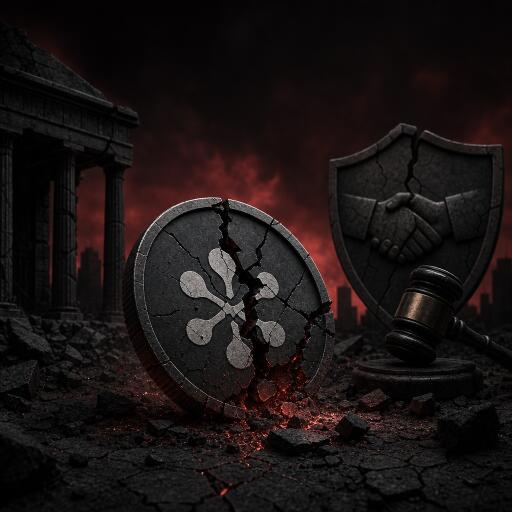
Eliza Labs founder Shaw Walters has declared the ELIZAOS token “completely dead” and confirmed the winding down of the ElizaOS Foundation following a settlement of a federal class action lawsuit in the Southern District of New York. As part of the resolution, the foundation is handing its remaining treasury to the plaintiffs, and the token—once valued near $2.5 billion under its previous brand—has collapsed roughly 97% to around $2.3 million in market value.
From Breakout to Breakdown
The project originally launched on Solana in October 2024 as “ai16z,” pitching a simple, eye-catching premise: an autonomous AI agent would make investment decisions, and token holders would share in the gains. The narrative resonated during the peak of crypto-and-AI enthusiasm, propelling the token’s market capitalization into the billions by January 2025.
Amid its rise, the project rebranded from ai16z to ElizaOS after objections to the original branding tied to its name’s resemblance to a prominent venture firm’s initials. Holders were migrated to a new token, a move that later became a focal point of investor grievances.
The Lawsuit and Settlement
The case, filed April 16, 2026, as Doe v. Walters in the Southern District of New York, named Walters, Eliza Labs Inc., co-founder Sebastian Quinn-Watson, and the AI16Z DAO as defendants. Plaintiffs alleged the venture was marketed as an autonomous, AI-governed fund when, in reality, human insiders exercised control over key decisions—undermining the decentralization and automation claims central to its appeal.
Additionally, the lawsuit challenged the token migration that accompanied the rebrand, arguing it diluted existing holders without genuine consent. These claims positioned the project’s governance structure—and the gap between its marketing and real-world control mechanisms—at the heart of the legal dispute.
Walters maintains the allegations lacked merit. He characterized the settlement as a pragmatic decision driven by the high cost and complexity of fighting a securities-style class action in federal court, rather than an admission of wrongdoing. Regardless, the financial capitulation effectively ends both the litigation and the project’s existence as a tokenized venture.
Market Fallout
Following news of the settlement and the foundation’s shutdown, ELIZAOS cratered, leaving holders with a fraction of the token’s former value. Market data indicates a drawdown of roughly 97% from peak to current capitalization, with additional declines after the wind-down plans became public. The foundation’s remaining treasury will be transferred to plaintiffs, closing the legal chapter but eliminating the project’s financial runway.
What Survives: The Software
While the token and foundation are shutting down, Walters says the underlying intellectual property for the open-source ElizaOS agent framework is owned separately from the foundation. He plans to continue development of the software with a focus on practical integrations—particularly in robotics and hardware—rather than another token launch. In short: the software may live on, but without a coin attached.
A Cautionary Tale for AI-Agent Tokens
The collapse of ElizaOS resonates well beyond a single project. During 2025, founders of autonomous trading agents, AI-run DAOs, and agent marketplaces repeatedly cited ai16z’s ascent as proof of concept for the entire category. Its downfall, culminating in a class action settlement and treasury handover, sets a sobering reference point for what can happen when decentralization claims and actual control diverge.
Legal strategies in similar cases have focused on tokens marketed as decentralized or autonomously governed but effectively controlled by a small cadre of insiders. When performance sours, that discrepancy can invite securities-law scrutiny. The lesson is straightforward: claims of autonomy, governance, and tokenholder rights must be matched by verifiable structures and transparent operations. If not, projects risk landing in the same legal crosshairs—particularly when migrations, treasury decisions, or material governance changes occur without robust, demonstrable consent.
Where This Leaves Holders
For ELIZAOS holders, the outcome is stark: the foundation is dissolving, the treasury is being surrendered under the settlement, and the token has been declared finished by its founder. The codebase may continue in other forms, but the coin does not. The episode caps a volatile arc—from headline-making growth to legal reckoning—leaving a clear message for future AI-agent ventures: credibility in governance is not a marketing detail; it is the product.