YMTC Overtook Kioxia in NAND Flash Shipments for the First Time – Startup Fortune
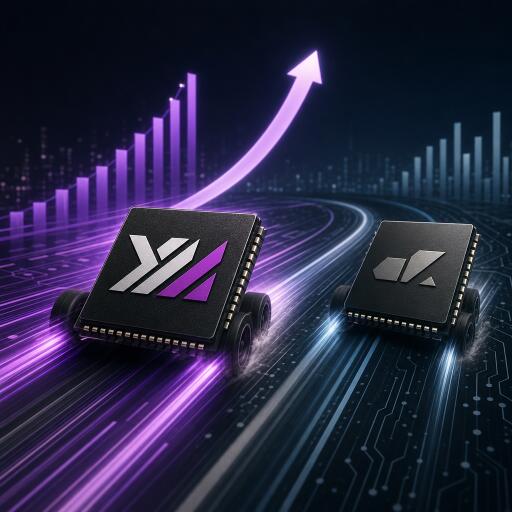
A major reshuffle has arrived in the NAND flash market. YMTC, the Chinese memory maker still subject to U.S. export controls, surpassed Kioxia in quarterly shipments for the first time, moving into the world’s top three by volume. The shift comes in the middle of an acute AI-driven shortage that has driven contract prices up dramatically and tightened supply across consumer and enterprise storage.
What Changed in the Rankings
In the second quarter of 2026, YMTC captured an estimated 14% share of global NAND bit shipments, edging past Kioxia and joining the top tier of suppliers by volume. Samsung remained the overall leader at roughly 25% of shipments, with SK Hynix (including Solidigm) at about 22% in second place.
YMTC’s ascent reflects solid production growth and stronger orders from Chinese device makers, alongside higher output of its newer 3D NAND architectures. Even so, the company still trails by revenue, ranking behind both Micron and Kioxia. The gap underscores a crucial dynamic: YMTC’s mix is heavier on consumer-grade flash, while the most lucrative demand has shifted to enterprise storage tailored for AI infrastructure.
AI Is Rewriting the NAND Market
AI servers have rapidly become the largest single driver of flash demand. Hyperscalers are racing to provision dense, high-endurance NAND to keep pace with GPU clusters and data pipelines, prioritizing enterprise SSDs with tight latency, high write endurance, and advanced error correction. That surge has collided with constrained supply, squeezing availability across every segment.
The result is the sharpest price cycle in years. NAND contract prices jumped roughly a third in the first quarter of 2026, then accelerated to increases approaching three-quarters in the second quarter. Some industry outlooks now foresee exceptionally strong pricing persisting well into 2027. Consumers are already feeling it: mainstream 1TB SSDs that hovered around $45 in late 2025 are now closer to $90, with premium and enterprise products rising even faster.
Volume vs. Value: YMTC’s Trade-Off
YMTC’s milestone is real, but the mix matters. Its bit-share gains have been led by high-volume, lower-margin categories such as client SSDs, smartphone storage, and removable cards. By contrast, the most profitable corner of the market—enterprise-grade NAND for AI and data center deployments—has captured the steepest price premiums and remains the key driver of vendor revenue and margins.
This divergence explains why YMTC can climb in shipments while still trailing in sales. It also highlights where future battles will be fought: winning enterprise qualifications, delivering consistent performance at scale, and securing supply chains resilient to export rules and tool constraints.
Sanctions vs. Scale
YMTC’s rise is particularly notable given ongoing U.S. export restrictions intended to limit access to advanced chipmaking tools and technologies. The company was added to the U.S. Entity List in 2022, yet it has continued expanding output and closing the gap with long-established rivals. The episode raises hard questions about the effectiveness of export controls when global demand is surging and alternative equipment sources and manufacturing workarounds exist.
At the same time, broader industry moves underscore how powerful the AI storage wave has become. Dormant fabs have been restarted, capex plans are being revisited, and inventories have tightened across channels. What was recently viewed as a cyclical, commodity-like market has turned into one of the chip industry’s tightest and most profitable segments.
Implications for Kioxia, Western Digital, and Buyers
- Kioxia: Losing the shipment ranking to YMTC is a psychological blow, even if revenue share remains more resilient thanks to enterprise exposure. Expect intensified focus on product mix, node transitions, and customer alignment in AI storage.
- Western Digital/SanDisk: The shortage and price strength can be a net positive for margins regardless of shipment share, provided enterprise supply remains tight and contract pricing holds.
- Micron and SK Hynix: Beneficiaries of enterprise demand with strong positioning in high-performance NAND. Execution on leading-edge nodes and controller firmware remains a differentiator.
- Device makers and consumers: Budget SSDs and embedded storage are pricier and harder to source than a year ago. Value segments may see periodic spot shortages and selective product rationalization.
- Hyperscalers: Even with preferred supplier relationships, lead times and procurement costs have risen. Long-term agreements and prepayments are increasingly common to secure capacity.
What to Watch Next
Several factors will determine whether YMTC can consolidate its gains or whether this is a peak-share moment fueled by extraordinary market tightness:
- Enterprise qualifications: Breaking deeper into AI and data center deployments would boost revenue share and margins, but demands rigorous, sustained performance at scale.
- Technology cadence: Consistent progress on layer counts, cell architectures, and controller integration will be critical to cost per bit and competitiveness.
- Policy environment: Further export control adjustments—or enforcement shifts—could sway tool access, yield learning curves, and output growth.
- Supply response: If the industry unlocks significant new capacity in late 2026 to 2027, price momentum could ease, changing the calculus for all suppliers.
- Demand durability: AI build-outs need to stay hot to keep fabs sold out. Any slowdown in GPU cluster deployments or storage intensity would ripple quickly through pricing.
For now, the story is straightforward: AI has turned NAND into scarce, strategic infrastructure, and YMTC has seized the moment to climb the shipment charts despite sanctions. Whether it can translate volume into higher-value enterprise share—and whether policy can meaningfully reshape the playing field—will define the next chapter.