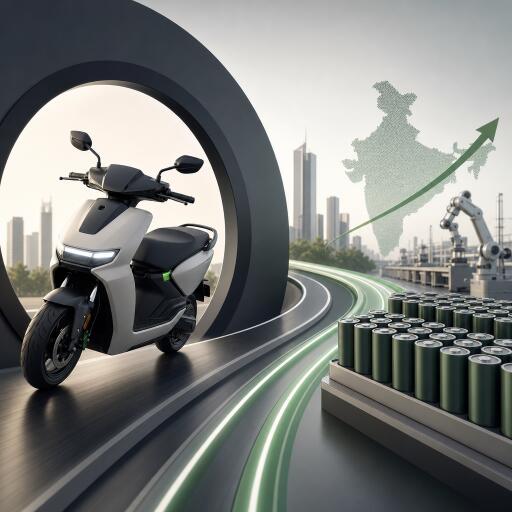
Ather rides into mainstream with Konarc; eyes more battery cell localisation
Ather Energy is making a decisive push into the mass market with its most affordable electric scooter yet, the Konarc, targeting coverage of 80–90% of India’s e-scooter segment as the lineup scales. The 13-year-old EV player aims to compete more squarely with established brands like Bajaj, TVS, and Hero, as one in four scooter buyers in India now chooses an electric model.
Konarc lineup and pricing
Konarc debuts as the first model on Ather’s new, cost-optimized EL platform and will be offered across two families—S line and Z line:
- S line: Four, more affordable variants starting at ₹99,999 (ex-showroom). The lineup begins with a 100 km IDC range, with additional options offering longer ranges, going up to 200 km.
- Z line: Premium variants with 125 km and 161 km IDC ranges, adding more features and technology over the S line.
Before Konarc, Ather’s most accessible model was the Rizta, with an entry price of around ₹1.20 lakh. By stepping below that threshold, Ather aims to unlock significantly larger volumes in the core price bands where electric scooters sell the most.
Designed for the mainstream, positioned as premium
Konarc has been styled to look and feel familiar to buyers of conventional ICE scooters, a deliberate choice to ease adoption among mass-market customers. At the same time, Ather is maintaining its premium positioning through technology, safety, and user experience. For comparable hardware—battery size, motor output, top speed, and range—the company says it intends to deliver more value via software and features.
Headline features include:
- MagicKey: Keyless operation for simpler daily use.
- AutoPop: A hands-free boot-opening mechanism.
- AirWalk: Low-speed assist to maneuver the scooter with ease.
- Advanced Electronic Braking System: Claims up to 20% higher peak braking power.
Battery choices and cell localisation
Konarc becomes the second Ather model after the Rizta to offer both NMC and LFP battery chemistries. Lower-cost variants will use LFP packs, while higher variants can opt for NMC, enabling Ather to tailor performance, cost, and longevity for different buyers.
Today, Ather imports battery cells from suppliers in Korea and China. However, the company is in advanced discussions with Indian cell manufacturers to begin local sourcing of at least part of its requirements. Localising battery cells is central to improving cost structures and insulating the supply chain, and it aligns with Ather’s broader profitability roadmap.
Market context and coverage goals
Electric scooters have reached roughly 25% penetration of India’s overall scooter market, and the opportunity is growing. Around half of the country’s e-scooter market—estimated at about 1.36 million units in FY26—sits in the ₹1.0–1.25 lakh price bracket. With Konarc’s pricing and breadth of variants, Ather expects to cover most of this high-volume band and, as production ramps up over the next year, to address 80–90% of the electric scooter market.
Previously, the 450 series and the Rizta helped Ather serve a large share of demand but left gaps in segments like maxi-scooters and certain sporty models exemplified by popular ICE offerings. Konarc is designed to plug these gaps and strengthen Ather’s play against both EV rivals and legacy ICE scooters.
Platform efficiencies and profitability outlook
The EL platform is engineered to deliver better unit economics than earlier architectures like the 450 series, supporting more favorable gross margins. Ather expects Konarc’s margins to improve steadily as the lineup scales, with the potential to surpass the Rizta’s already-strong gross margin over the next 12–18 months. Battery cell localisation is expected to be a key lever in that margin expansion.
What’s next
Konarc is the first of multiple models planned on the EL platform, indicating a product roadmap aimed at broader customer cohorts as the market matures. The scooter’s launch headlined Ather’s annual Community Day event in Bengaluru, and with an e-motorcycle under development and growing traction in that sub-segment, the company’s next reveal could extend its mainstream ambitions beyond scooters.