Cab fleet operators attract fresh capital as EV, premium rides gain ground | Mint
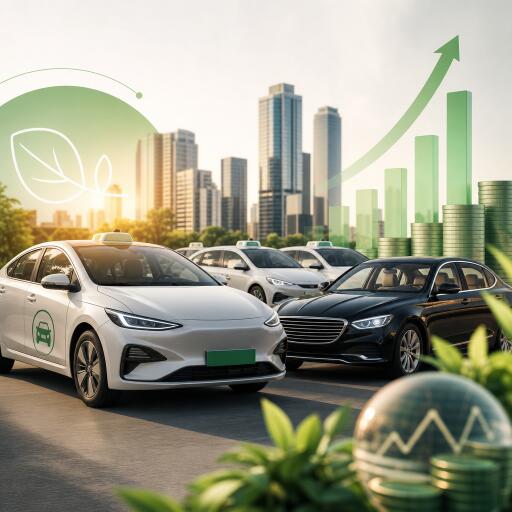
India’s cab fleet operators are drawing a fresh wave of capital as ride-hailing demand shifts toward electric vehicles, premium categories, and corporate transport. Platforms are expanding supply without leaving the entire upfront investment to individual drivers, making professionally managed fleets central to growth.
Funding surges as platforms seek supply
Fleet operators disclosed at least $37.89 million in funding in 2026, nearly 90% higher than the $20 million raised in 2025, based on company announcements. Beneficiaries include Lithium Urban Technologies, Carrum Mobility, Refex Mobility, Everest Fleet, LetzRyd, and TrEV. The capital is aimed at scaling EV fleets, adding premium cars, and strengthening operations for corporate and airport transfer use cases.
Why fleet operators matter
Electric vehicles demand higher upfront investment and introduce uncertainty around residual values and lifecycle economics—factors that can deter individual driver-owners. Fleet companies are stepping in to absorb capex, manage utilization and maintenance, and de-risk adoption for platforms. A broader consumer shift from ownership to “usership” is also at play, with mobility increasingly consumed as a service rather than as a personal asset.
Premium and corporate demand accelerates
With more employees returning to offices, rising congestion, and uneven last-mile connectivity, demand for reliable door-to-door services is growing. Premium ride categories are expanding quickly, supported by corporates and higher-spend personal users—especially for airport and intercity transfers. Carrum Mobility, a B2B fleet manager working with Uber, reports that about a fifth of its fleet already serves the premium “Black” category and expects that share to climb.
Corporate travel is another strong growth vector. As global capability centres (GCCs) scale in India—approaching roughly 2,000 centres—workforces at single facilities can exceed 20,000–30,000 employees. This is driving recurring demand for compliant, reliable, and scheduled transportation, often baked into employee compensation. Riding this theme, Refex Mobility crossed ₹100 crore in revenue in FY26.
Strategic capital and partnerships
Ride-hailing platforms are becoming more active investors in fleet operators to secure dependable vehicle supply, including EVs and premium cars. Industry estimates place Uber’s market share at around 45%, underscoring the strategic value of its fleet partnerships.
Gurugram-based Carrum raised $17 million from Uber in 2026 ($7 million in January and $10 million in September), valuing the company at about $168 million post-money. Uber has also teamed with Refex Green Mobility to deploy 1,000 electric vehicles across major cities by 2026, and previously partnered with Lithium Urban Technologies to roll out more than 1,000 electric sedans in Delhi-NCR, Mumbai, Bengaluru, Hyderabad, and Pune on its Rentals and Premier services.
Other strategic investors are entering the fray. In June, JSW Green Mobility announced an investment in Lithium Urban Technologies to support expansion of EV fleets and infrastructure, aligning with the group’s broader push into hybrids and EVs. Industry investors note that ride-hailing platforms seeking supply and automakers looking to move inventory are increasingly driving deal flow.
EV momentum builds
India’s electric passenger vehicle sales rose 83.6% year-on-year to 1,99,923 units in FY26, highlighting the pace of transition. Several focused players—such as TrEV, GreenSM, and Shoffr—have emerged to serve EV-first cab demand. Platforms are also setting long-term goals: one leading global ride-hailing company has committed that 100% of rides will occur in zero-emission vehicles, public transit, or micro-mobility by 2040, with India included in that pledge.
While platforms push toward electrification, individual drivers often hesitate to purchase EVs amid uncertainties on resale values and total cost of ownership. Fleet operators bridge this gap by taking on asset risk, consolidating charging and maintenance operations, and ensuring high utilization—accelerating EV penetration in urban mobility.
Market outlook and financial traction
India’s ride-hailing market generated about $2.51 billion in revenue in 2025 and is projected to reach roughly $11.06 billion by 2033, according to industry forecasts. As categories expand and service quality improves, premium and corporate demand are expected to outpace the broader market.
Fleet operators’ financials reflect the expansion. Lithium Urban Technologies’ revenue more than doubled from ₹83.4 crore in FY23 to ₹192.3 crore in FY25. Everest Fleet’s revenue nearly tripled from ₹469.5 crore in FY23 to ₹1,265.3 crore in FY26. Refex Mobility crossed the ₹100-crore threshold in FY26 with total income of ₹103.2 crore.
The bottom line
With ride-hailing platforms scaling electric and premium segments, and corporates locking in dependable transport at scale, fleet operators are becoming indispensable. Strategic capital—from platforms and industrial groups alike—is speeding up vehicle supply, especially EVs. As usership overtakes ownership and the market expands, professionally managed fleets look set to capture a growing share of India’s urban mobility spend.