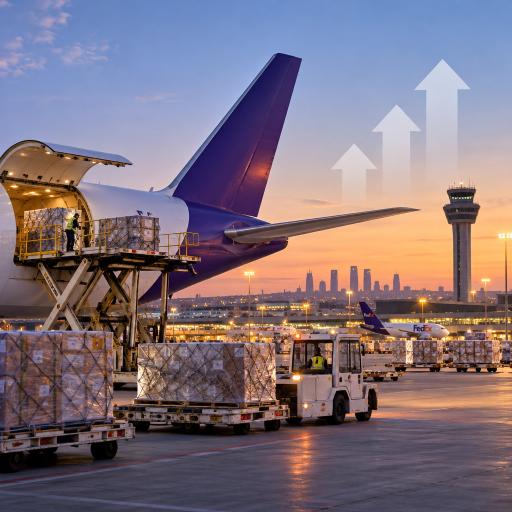
FedEx boosts Madrid airside capacity for peak season
FedEx Express has completed the modernisation of its second airside facility at Adolfo Suárez Madrid-Barajas Airport, increasing operational capacity and streamlining customs procedures ahead of the peak shipping season.
The upgraded site adds 1,550 sq m of airside warehouse space and 913 sq m for technical and administrative offices. Combined with the company’s existing infrastructure at the airport, the project takes FedEx’s total airside operational footprint in Madrid to more than 4,500 sq m.
The expansion strengthens Madrid’s position as a major gateway and transit hub within FedEx’s European and intercontinental network. The facility includes four dedicated trailer docks and a castor deck roller platform capable of handling and manoeuvring up to 14 unit load devices.
It also provides high-density, secure storage for 5,700 pieces, alongside automated sorting technology, Check-Weight-Cube equipment for measuring and weighing shipments, and X-ray systems for cargo inspection.
Customs capabilities include a Temporary Bonded Warehouse and an authorised customs area. These features are intended to simplify formalities, improve shipment processing and reduce transit times.
The facility will centralise Express and Economy shipping flows between mainland Spain and the Canary Islands. It will also increase consolidation capacity for European Union Economy shipments travelling to key destinations in Latin America and the United States.
FedEx said the site is designed to support express and high-value cargo operations. It will improve the handling of International Priority Freight, including priority cargo and heavyweight goods that require direct ramp access and accelerated customs processing.
Additional capacity will enable the Madrid operation to respond to seasonal surges and accommodate tailored logistics projects for strategic customers.
María José Palacios, senior manager for hubs and gateways in Iberia at FedEx, described the expansion as an important step in strengthening the company’s logistics infrastructure across the Iberian Peninsula.
She said consolidating air cargo, transit and customs operations at one of Southern Europe’s key hubs would provide the speed, resilience and scalability required by Spanish businesses. The modernised facility is also expected to improve cross-border flows and help customers connect more efficiently with global markets during peak season.