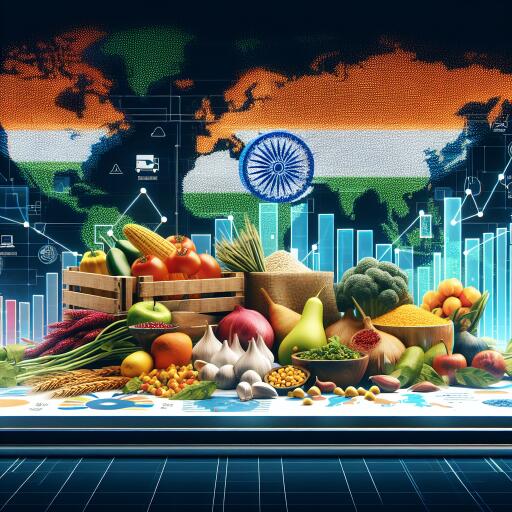
Business News | AAHAR 2026 – 40th Edition: Strengthening India’s Role in the Global Food Economy Through a Structured B2B Platform | LatestLY
As the world navigates geopolitical uncertainty, supply chain realignments, and intensifying concerns around food security, structured trade platforms are becoming indispensable. Marking four decades of impact, AAHAR’s 40th edition stands as a clear statement of India’s expanding influence and reliability within the global food economy.
Four Decades of a Strong B2B Bridge
AAHAR has grown into one of Asia’s most trusted Business-to-Business platforms for the food and hospitality sector. It links producers, processors, exporters, technology providers, hospitality leaders, and institutional buyers from around the world. The 2026 edition encapsulates both continuity—a proven marketplace—and transformation, reflecting the rapid evolution of the global food ecosystem.
From Production Power to Value Creation
India ranks among the world’s largest producers of milk, spices, rice, fruits and vegetables, and pulses. Highlights include approximately 24% of global milk output, a 25% share of the global spices market, around 28% of world rice production, and global leadership in bananas (26%), mangoes (43%), and papayas (37%). Yet production scale alone does not guarantee export leadership. Real value emerges when agriculture connects to processing, technology, packaging, logistics, and global markets—precisely the integration AAHAR enables.
Export Momentum and the Path Ahead
Recent performance signals strong potential for higher value capture. In FY25, dairy exports reached about 113,350 metric tonnes worth $493 million, an 80% year-on-year increase. India exports roughly 1.5 million tonnes of spices valued at $4.5 billion annually, accounting for about a quarter of global spice exports. Rice retains deep global penetration, with shipments of 21.55 million tonnes in 2025 valued at approximately $12.95 billion in FY25. Fruits and vegetables exports stood at about $1.82 billion in FY25, while pulses exports reached a record 876,000 metric tonnes from January to November 2025, with full-year levels near 1 million metric tonnes. The way forward is clear: strengthen value addition, accelerate technology adoption, and build structured market linkages to widen India’s footprint in global food trade.
What AAHAR 2026 Brings
The scale and diversity of AAHAR 2026 reflect industry confidence in the platform. This edition features 1,800+ exhibitors, including 155 international participants from 17 countries, with Italy as the Partner Nation. The showcase spans the entire food ecosystem: processed foods, dairy and marine products, spices and organic produce, bakery and confectionery, food processing machinery, cold chain solutions, packaging innovations, and hospitality technologies. Beyond products, the exhibition emphasizes technology solutions that drive efficiency, quality, and sustainability across the value chain.
India’s Competitive Edge in a Rewiring World
As global supply chains diversify, India presents a compelling mix of agricultural scale, a skilled workforce, expanding processing capacities, and a dynamic entrepreneurial base. Agricultural and processed food exports reached approximately $49 billion in FY25, with agriculture comprising around 11.9–13% of the total export basket. The food processing sector contributes about 7.93–8.8% to India’s manufacturing GVA and accounts for roughly 12.91% of organized manufacturing employment. Platforms like AAHAR accelerate these linkages, enabling Indian businesses to connect efficiently with international buyers and partners.
A Springboard for MSMEs and Startups
AAHAR has consistently provided an inclusive runway for Micro, Small and Medium Enterprises and emerging entrepreneurs. Dedicated startup pavilions, curated buyer–seller meetings, and targeted networking help smaller firms reach institutional buyers and new geographies. Many MSMEs secure their first export orders here and build relationships with technology, financing, and logistics partners essential for scale. Policy support—through initiatives such as PMFME, the Production Linked Incentive for food processing, and infrastructure under PMKSY—creates an enabling environment that AAHAR helps translate into real business outcomes.
Sustainability Moves Center Stage
The global food industry is embedding sustainability into core strategy. Exhibitors are highlighting solutions that:
- Advance responsible sourcing and ethical supply chains
- Improve water and energy efficiency
- Adopt sustainable packaging to reduce plastic use
- Lower carbon footprints via optimized logistics
- Cut waste and enable circular economy practices
- Promote organic and regenerative agriculture
These innovations reflect a shift from compliance to competitive advantage, aligning with buyer expectations in global markets.
Leadership View
The food and hospitality ecosystem in India is expanding rapidly, driven by favorable demographics, rising prosperity, urbanization, changing lifestyles, growing travel, and modern supply chain infrastructure. With India already a major exporter of agricultural goods, the next wave centers on value-added products, equipment, and accessories—areas set to benefit from new trade agreements. AAHAR connects the entire chain—from front end to back end—with global markets, and this edition welcomes Italy as the Partner Nation.
Outlook
AAHAR 2026 is more than an exhibition—it is a platform for action. By catalyzing value addition, technology exchange, and international partnerships, it strengthens resilient supply chains, expands export opportunities, and opens doors for MSMEs. As the 40th edition gets underway, it underscores India’s growing leadership in shaping a secure, sustainable, and globally connected food economy.