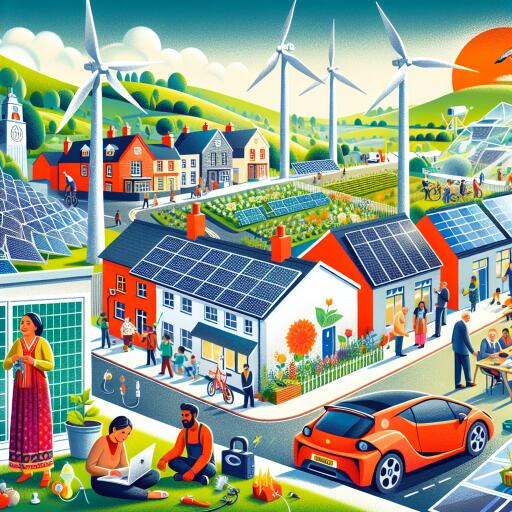
£10m boost for Welsh communities to generate local renewable energy
The Welsh Government has announced the third round of the Ynni Cymru Grant Capital Scheme for 2026–27, opening for applications this month. The latest £10 million funding round is designed to accelerate Smart Local Energy Systems (SLES), helping communities to cut energy costs, reduce emissions, create jobs, and build stronger local infrastructure.
The scheme supports integrated local energy solutions that bring generation, storage, and smart control together at community scale. Typical projects can include:
- Solar photovoltaic (PV) installations on public, commercial, or community buildings
- Air source or ground source heat pumps for low‑carbon heating
- Electric vehicle charging infrastructure
- Battery energy storage to optimise locally generated power
Eligible applicants include community energy organisations, social enterprises, public sector bodies, and small and medium-sized enterprises (SMEs) across Wales. By blending proven technologies with smart management, projects can support vital services, strengthen local supply chains, and keep more value within communities.
This round builds on the momentum of the first two phases of Ynni Cymru support, which backed 78 projects across Wales with £22.9 million of investment. With the new £10 million allocation for 2026–27, the total public investment in this programme will exceed £32 million, further scaling up community-led clean energy.
According to the Cabinet Secretary for Economy, Energy and Planning, Rebecca Evans, the new funding is about putting communities in control of their energy future. By rolling out smart local energy systems in settings from city leisure centres to rural community halls, the programme is already cutting bills, reducing emissions, and protecting essential local services. She highlighted that this round will help more places generate their own clean power and strengthen resilience across Wales.
Real-world impact: Boomerang Cardiff
One recent example is the Cardiff-based charity Boomerang, which works to prevent homelessness, poverty, and social isolation. The organisation received £150,000 through the scheme last year to decarbonise four industrial units. The project is installing air source heat pumps, battery storage, and EV chargers, all linked to an existing rooftop solar array.
Boomerang also plans to power ten repurposed shipping containers with clean energy. These containers will form a new community village featuring a café, charity shops, training rooms, and startup spaces—creating opportunities for local enterprise and skills development while delivering low-carbon services.
Once complete, the smart local energy system is expected to cut Boomerang’s electricity costs by around 70%. Fossil fuels have already been removed from the site, demonstrating how targeted investment can transform buildings, lower running costs, and free up resources for frontline community support.
What strong applications will demonstrate
Prospective applicants are encouraged to shape proposals that:
- Integrate multiple technologies (generation, storage, and smart controls) to maximise local use of clean power
- Deliver clear and measurable outcomes, including carbon savings, bill reductions, and resilience benefits
- Support community ownership or benefit-sharing models that keep value local
- Strengthen local economies through training, jobs, and Welsh supply chains
- Are ready to deliver within the 2026–27 funding period, with robust permissions, timelines, and procurement plans
Funding can help projects move from design to deployment, enabling organisations to retrofit existing buildings, electrify heat and transport, and manage energy intelligently. By matching on-site generation with flexible demand and storage, communities can reduce exposure to volatile energy prices and keep essential services affordable.
A greener, stronger, more resilient Wales
The Ynni Cymru Grant Capital Scheme is part of a wider effort to decarbonise Wales while creating fair, place-based economic opportunities. As more communities adopt SLES approaches, the benefits compound: cleaner air, lower running costs for public and community facilities, and greater energy independence.
With applications now open for 2026–27, community energy organisations, social enterprises, public sector bodies, and SMEs are encouraged to prepare well-evidenced proposals that can deliver lasting local impact. This £10 million round aims to bring more projects to life—helping people across Wales generate their own renewable energy and build a more sustainable future.