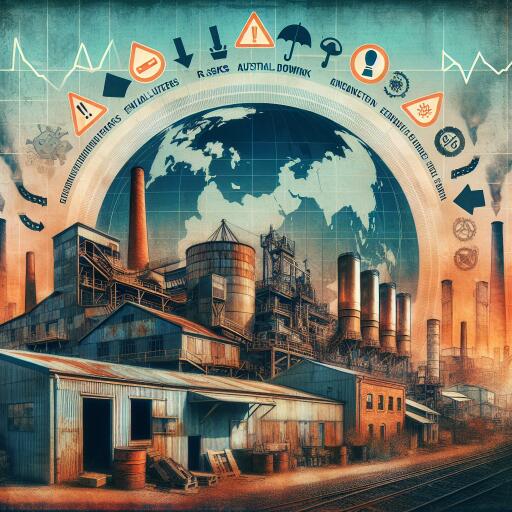
How Deindustrialization Has Left Australia Exposed In A Riskier World
Australia is entering a period of sharper geopolitical competition just as its industrial base is at its weakest in decades. A long shift toward offshoring and reliance on global supply chains, once celebrated as economic efficiency, has hardened into a structural vulnerability—one that now intersects directly with national security.
As supply chains tighten and strategic rivalry intensifies across the Indo-Pacific, Australia’s diminishing industrial depth is no longer a purely economic concern. It has become a central question of resilience and sovereignty.
A Nation at a Strategic Crossroads
For years, policy settings were built on assumptions that are now eroding:
- Global trade would remain open and reliable.
- The region would stay broadly stable and predictable.
- Domestic production was optional in an interconnected economy.
These assumptions no longer match reality. The result is a growing gap between Australia’s strategic needs and its industrial capacity.
Key Vulnerabilities Emerging
- Heavy reliance on imported fuel.
- Offshoring of essential manufacturing.
- Defence production that lags strategic requirements.
- Lack of a cohesive, long-term national industrial strategy.
At the centre of these challenges sits the legacy of deindustrialisation, which has hollowed out capabilities that once underpinned national strength.
The Cost of Deindustrialisation
The transition toward a services-led, globalised economy was heralded as modernisation. Over time, it dismantled industries critical to long-term resilience and strategic autonomy.
Erosion of Economic and Industrial Resilience
- Automotive manufacturing
- Oil refining
- Steelmaking
- Shipbuilding
- Fertiliser production
The consequence is greater dependence on external suppliers for fuel, materials, and manufactured goods—an increasingly precarious position as supply chains fragment.
Symbolic Turning Points
The closure of BHP’s Newcastle steelworks in 1999, once employing around 11,000 people, marked a defining moment. Further blows followed with Ford’s exit from Geelong in 2016 and Holden’s closure in Elizabeth, South Australia, in 2017. These events represented more than industrial losses; they accelerated the unraveling of communities built around skilled work, apprenticeship pipelines, and long-term local identity.
The Social and Economic Impact
Decline of Community Cohesion
Industrial hubs once provided:
- Stable, well-paid employment
- Pathways for social mobility via apprenticeships and technical training
- Shared civic identity and community institutions
- Concentrated pools of skilled labour
Their decline has left pockets of unemployment, weakened regional economies, and fractured social structures.
Stagnant Wage Growth
Real wages have been sluggish for nearly two decades. This reflects the breakdown of domestic supply chains, a shift from high-wage manufacturing to lower-wage services, and limited regional opportunities for advancement. The gap between headline economic data and lived experience is rooted in these structural shifts.
A Strategic and Security Liability
Deindustrialisation has not only cost jobs; it has eroded institutional memory, coordination capacity, and technical expertise. Outsourcing complex industries reduces the ability to:
- Maintain sovereign defence capability
- Respond to geopolitical disruption
- Protect critical infrastructure
- Sustain independent supply chains
Recent crises exposed these weaknesses when even basic protective equipment became scarce due to offshore reliance.
Fuel Dependency: A Critical Weak Point
Australia imports most refined fuels and holds limited emergency reserves. Any disruption to maritime trade—whether geopolitical, commercial, or due to natural disasters—could quickly affect:
- Defence readiness
- National logistics and transport networks
- Food supply chains
- Broader economic stability
This dependence is one of the country’s most acute strategic risks.
The Case for Strategic Reindustrialisation
Reindustrialisation was once dismissed as inefficient or protectionist. Today, the strategic case outweighs old orthodoxy. Strong industrial capacity can coexist with global competitiveness, and it is essential for resilience.
Why It Matters
- Resilience over efficiency: Recent shocks show that redundancy and domestic capacity are strategic assets.
- National security: Defence preparedness requires a robust industrial base and skilled workforce.
- Regional renewal: Industrial revival can restore opportunities in communities left behind by globalisation.
What Must Change
- Rebuild refining capacity and diversify fuel sources.
- Expand defence manufacturing, especially shipbuilding and munitions.
- Increase strategic petroleum reserves and storage resilience.
- Incentivise high-value, technologically advanced manufacturing.
- Forge public–private partnerships to accelerate innovation and scale-up.
- Invest in vocational training, STEM pathways, and regional workforce development.
Rebuilding Regional Australia
Reindustrialisation is a social project as much as an economic one. Regions such as Newcastle, Geelong, and Elizabeth need targeted, long-term interventions that rebuild capability and confidence:
- Incentives for advanced and clean manufacturing
- Stronger links between universities, TAFEs, and industry
- Local training pipelines aligned to emerging technical fields
- Enabling infrastructure that attracts private investment
Strengthening regional industrial clusters can narrow the growing divide between metropolitan centres and industrial communities.
Toward a Coherent National Strategy
Australia’s long-term security depends on aligning economic, industrial, defence, and energy policies within a unified framework. The assumptions that shaped the last generation’s economic model no longer hold in a world marked by rivalry, supply shocks, and technological competition.
The Road Ahead
Deindustrialisation has created deep vulnerabilities at a time when resilience matters most. The Indo-Pacific is more contested, supply chains are less reliable, and the pace of technological change is accelerating.
A deliberate, strategic reindustrialisation agenda—anchored in national security, economic stability, and regional revitalisation—offers a path forward. Rebuilding capacity is not about nostalgia; it is about ensuring sovereignty, adaptability, and prosperity in a volatile world. Australia faces a choice: continue relying on fragile global systems or rebuild the industrial foundations essential for its future security and success.