Exclusive-Iran tells Houthis to close Red Sea gateway if US hits power network, sources say
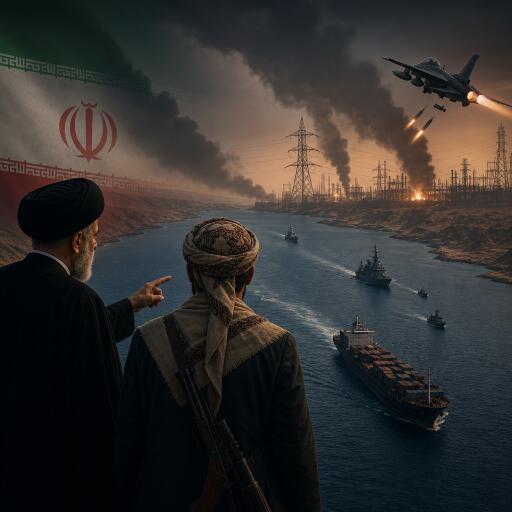
Iran has asked Yemen’s Houthi movement to be ready to shut the Red Sea oil route if the United States strikes Iranian power infrastructure, according to three sources familiar with internal discussions, signaling a potent new threat to global energy supplies.
The idea has been debated within Iran’s leadership, and the message has been relayed to Houthi allies, said two senior Iranian sources and a regional source. They did not specify how or when the communication was delivered, or whether it followed the recent threat by the U.S. president to target Iranian power facilities.
Officials from Iran’s foreign ministry and a spokesperson for the Houthis did not immediately respond to requests for comment.
Houthis prepare near Bab el-Mandeb
A source close to the Houthis said the group had completed preparations to target shipping by deploying missiles and drones near the Bab el-Mandeb strait—the southern gateway to the Red Sea—with positions in Yemen’s highlands overlooking Hodeidah and the Gulf of Aden. The group is awaiting an order to proceed, the source said.
Any disruption in the Red Sea and its narrow Bab el-Mandeb chokepoint would sharply intensify the global energy crisis already worsened by the closure of the Strait of Hormuz. With Hormuz shut, Houthi strikes on vessels or ports in the Red Sea would jeopardize the Middle East’s two principal oil export routes at once, opening a new front in both the energy crisis and Iran’s wider standoff with the United States.
Representatives of Iran’s Islamic Revolutionary Guard Corps (IRGC) already present in Yemen will determine the timing of any move to close Bab el-Mandeb, according to the source close to the Houthis.
Amid rising tensions, the Houthis recently fired missiles at Saudi Arabia after accusing the kingdom of bombing an airport they control, shattering a four-year truce between the two sides.
Torbjorn Solvedt, principal Middle East analyst at a risk intelligence firm, said the flare-up arrives at a dangerous moment. “If fighting intensifies and spills over into Red Sea export infrastructure and shipping, it will threaten the only major alternative route for oil exports from the region,” he said.
Two regional sources close to Riyadh said Saudi Arabia is taking the threats from Iran and the Houthis very seriously and is aware that the Yemeni group is closely coordinating with Tehran over Red Sea operations.
Conflict backdrop and energy stakes
The current phase of conflict escalated after strikes on Iran by Israel and the United States on February 28, which prompted Tehran to close the Strait of Hormuz—previously the conduit for roughly a fifth of global energy supplies. Tensions have mounted since a fragile June truce between Tehran and Washington collapsed, reviving fears of broader war and straining energy flows through Hormuz.
With Hormuz closed, a significant share of Gulf oil has been rerouted to the Red Sea via a Saudi pipeline. The waterway now carries about 7% of the world’s energy supplies. During the Gaza war, earlier Houthi attacks on Red Sea shipping forced many carriers to detour around Africa—a longer, costlier route that strained global logistics.
Saudi Arabia has diverted about 70% of its energy exports through its Red Sea port of Yanbu. Any direct strikes there would deliver a fresh shock to oil markets.
One regional source said Iran’s leadership aims to pressure Washington by raising the potential economic costs of confrontation, including threats to Red Sea shipping and Saudi oil flows. Shutting the strait would not be technically difficult, the source added, noting that even small-arms fire can disrupt maritime traffic without the use of sophisticated missiles.
Regional alignments and capabilities
Iran views the Houthis as part of its “Axis of Resistance,” alongside Lebanon’s Hezbollah and Iraqi Shi’ite factions, some of which have already stepped into the broader confrontation between Tehran and Washington. However, Houthi rebels have not formally entered the larger conflict, according to sources familiar with their discussions.
U.S. officials have long maintained that Iran provides the Houthis with weapons, funding, and training, including support channeled through Hezbollah—an accusation Tehran denies.
With the Red Sea serving as the most viable alternative to the now-closed Hormuz route, any Houthi move to choke Bab el-Mandeb would amplify supply risks, drive up transport costs, and deepen uncertainty across energy markets already on edge. As preparations reportedly advance on Yemen’s western front and pressure mounts across the region, the timing and scope of any action at Bab el-Mandeb could become a decisive factor in the trajectory of both the conflict and the global energy outlook.