Iraqi fish enters global markets – Shafaq News | Latest breaking news in Iraq and the world
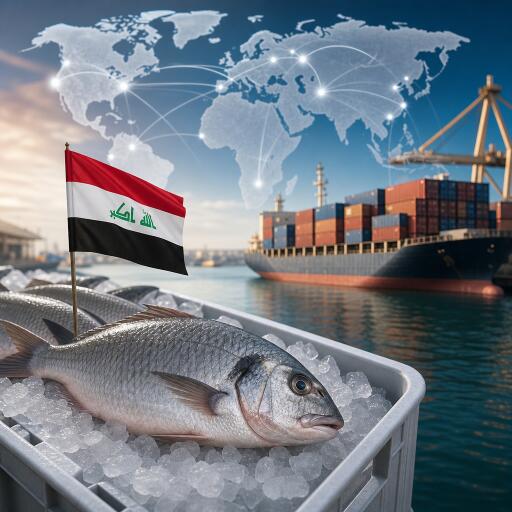
Iraq has begun exporting fish to international markets for the first time, a move hailed by Agriculture Minister Abdul Rahim Al-Shammari as an important achievement for the country’s agricultural sector and economy.
According to Al-Shammari, the launch of exports is the opening step in broader efforts by the ministry to develop the sector, sustain production, remove longstanding obstacles, and improve returns for fish farmers. He framed the decision as part of a push to strengthen non-oil revenues and enhance Iraq’s food value chains.
While announcing the milestone, the Agriculture Ministry did not disclose key details about the initial shipments. Information on export destinations, shipment volumes, fish species, certification procedures, and the companies involved was not provided.
Iraq’s fisheries have faced significant pressures in recent years. Producers have grappled with water scarcity, disease outbreaks, falling market prices, and the closure of unauthorized fish farms. In September 2025, Fish Producers Association head Eyad Al-Talibi warned that the domestic market was experiencing an unprecedented decline, with production costs outpacing selling prices, squeezing farmers’ margins.
Against this backdrop, the start of exports signals a potential turning point. Success will likely depend on strengthening quality controls, aligning with international health and safety standards, improving cold-chain logistics, and ensuring transparent certification and traceability. Supportive policies—such as facilitating access to feed, veterinary services, and finance—could also help producers meet overseas requirements while stabilizing local supply.
Market development will further require clear communication on species, grades, and sourcing regions, alongside cooperation with traders, processors, and transport providers. Establishing reliable testing and inspection protocols, as well as consistent pricing frameworks, would give both domestic stakeholders and international buyers greater confidence.
For fish farmers, the prospect of access to global markets offers a path to improved income if costs can be managed and productivity sustained. For Iraq’s broader economy, even modest growth in aquaculture exports can contribute to diversification and job creation along the value chain—from hatcheries and feed suppliers to processing and distribution.
As details emerge about destinations, volumes, and participating companies, the coming months will clarify how quickly Iraq can scale its fish exports and how effectively the sector can balance external demand with domestic market needs. For now, the announcement marks a notable step toward revitalizing Iraq’s fisheries and integrating them into global trade.