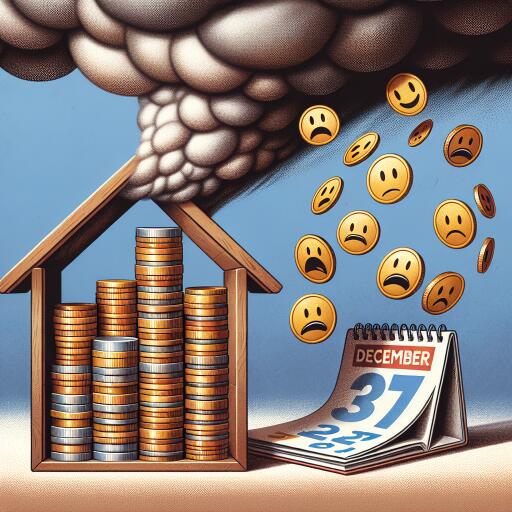
January Economic Reality Strips Ghana Households Of December Optimism
Ghana enters 2026 with households facing the unforgiving arithmetic of January: festive spending meets a stack of immediate obligations—school fees, rent, transport and utility bills—arriving at once while salaries remain unchanged from December. The month also acts as a financial pressure point as delayed price adjustments kick in after many traders, transport operators and service providers held off increases during the holidays.
Education Costs Bite Early
University of Ghana students are starting the year with fee hikes exceeding 25 percent. For example, new entrants to the College of Humanities now pay 3,110 cedis, up from 2,319 cedis, while continuing students have seen fees rise from 1,777 cedis to 2,253 cedis—a jump of roughly 27 percent. The increases cut across the university’s colleges, stretching household budgets already thinned by December expenditures and making fee deadlines a top January stressor.
Stronger Cedi, Uncertain Relief
The cedi opened 2026 around 10.51 to the US dollar after appreciating by roughly 41 percent in 2025—its strongest annual showing in decades and among the best performances globally. Yet many households remain skeptical that macro stability translates into relief at the checkout counter, where the prices of everyday goods still feel sticky on the way down.
Inflation Eases, Policy Rate Falls—But Tariffs Rise
Inflation cooled to 6.3 percent in November 2025, the lowest since early 2019, capping an eleven-month disinflation streak from the crisis peak of 54 percent in December 2022. In response, the Bank of Ghana cut the policy rate by a cumulative 1,000 basis points across three decisions in 2025, bringing it to 18 percent in November as disinflation gained traction.
Nonetheless, January opens with higher utility tariffs that filter directly into household budgets. Under the 2026–2030 Multi-Year Tariff Order, electricity rates rose by 9.86 percent and water tariffs by 15.92 percent effective January 1. Residential lifeline users (0–30 kWh) now pay 88.37 pesewas per kWh, up from 80.43 pesewas, while households consuming 301 kWh and above face 264.56 pesewas per kWh, up from 240.81 pesewas. These adjustments can dilute the purchasing-power boost from lower inflation and interest rates, at least in the short run.
Currency Markets: Fundamentals Meet Psychology
January typically sees lighter foreign-exchange demand as import-heavy December fades, but currency markets remain as sensitive to expectations as to data. Precautionary hedging by firms and households can stir pressure without obvious triggers, making consistent central bank communication especially valuable. In a delicate month, predictability and calm can often achieve more than dramatic interventions.
Labour and Business: From Optimism to Endurance
As businesses reopen, December’s optimism gives way to January’s cash-flow calculus. Rather than headline layoffs, employers often adopt quieter measures—hiring freezes, trimmed hours, tightened overtime, and deferred bonuses. These subtle shifts heighten household anxiety in ways not fully captured by official statistics, compounding the pressure of rising costs against fixed incomes.
Fiscal Tightening on the Ground
Government spending patterns also reset after the year-end rush. Payments slow, and arrears can build quietly as contractors wait for funds. While framed as fiscal discipline, the practical impact is delayed cash flow that ripples through businesses, workers and families connected to public contracts and services. The cycle is familiar, but its bite on household liquidity remains acute each January.
Credit Stays Cautious
Despite policy rate cuts, bank lending remains guarded. Interest rates stay elevated relative to pre-crisis norms, maturities are short, and collateral demands remain stiff—conditions that exclude many small businesses. January becomes a month to protect cash rather than borrow for expansion, reflecting cautious sentiment about the durability of the recovery.
Beyond Stability: The Structural Challenge
Analysts caution that currency stability and lower inflation are necessary but not sufficient. The larger prize is sustained industrial transformation and job creation that raise real incomes. Long-run case studies of local manufacturers show that, despite continued investment, dollar-denominated revenues have sometimes trended lower over decades, underscoring how past volatility and market constraints limited scale and competitiveness. Without deeper productivity gains and a friendlier operating environment, macro improvements risk feeling abstract to households and businesses.
January’s Test of Credibility
January strips away holiday emotion and demands discipline. For households, it’s a budgeting stress test. For businesses, it’s a cash-flow drill. For policymakers, credibility matters more than promises: markets and citizens watch whether stability is being converted into durable relief. The month offers clarity rather than miracles, forcing an honest look at whether recent gains can withstand rising utility costs, education fees and daily expenses.
Ghana’s economy faces its annual reality check as families navigate the gap between encouraging macro indicators and lived financial pressures. The coming weeks will signal whether improved stability marks the start of a genuine recovery or merely a pause before familiar structural challenges reassert themselves.