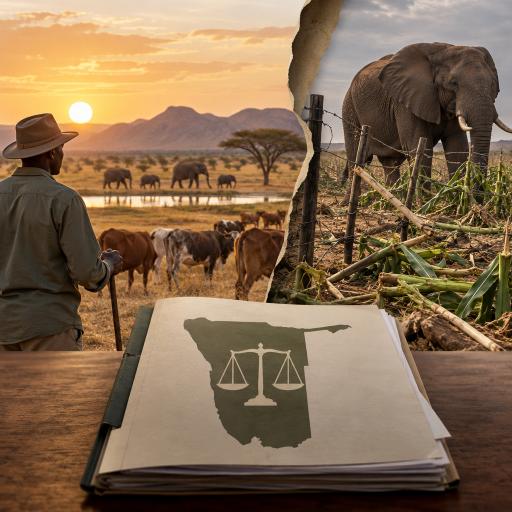
The illusion of coexistence: Is Namibia’s human-wildlife conflict policy serving rural farmers?
Etosha National Park represents one of Namibia’s greatest conservation and tourism achievements. Its wildlife, roads and upgraded infrastructure attract visitors from around the world, generating substantial income through entrance fees, concessions and related tourism activities.
From 1 April 2026, daily entrance fees are set to rise significantly. International adults from outside the Southern African Development Community will pay N$280, SADC nationals N$180 and Namibian citizens N$60. Fees for children aged nine to 15 will be N$140 for international visitors and N$90 for SADC visitors.
Etosha reportedly generates about N$90 million annually from entrance and conservation fees, with further revenue potentially available through tourism concessions involving neighbouring conservancies and the Hai//om San community. Yet these impressive figures raise an important question: How much of this income reaches rural farmers who bear the direct costs of living alongside protected wildlife?
The animals tourists pay to see can cross porous park and conservancy boundaries, killing livestock, destroying crops and threatening rural livelihoods. Namibia’s community-based natural resource management model has helped restore populations of elephants, lions and other wildlife, but the economic burden of that success is unevenly distributed.
The limits of the current policy
Namibia does not provide full statutory compensation for damage caused by wild animals. Instead, the Human-Wildlife Conflict Self-Reliance Scheme offers payments intended to offset losses. These payments are framed as assistance rather than reimbursement based on the actual market value of livestock, crops or property destroyed.
The consequences can be severe. In one incident in the Kunene region, a communal farmer lost 76 animals—66 goats and 10 sheep—to lions in a single raid. The farmer was allocated N$40,000 under the scheme.
At a modest estimated market value of N$2,500 per animal, the immediate loss would amount to at least N$190,000. That calculation excludes the potentially higher value of breeding animals, future production and the cost of rebuilding the herd. The payment therefore left the farmer carrying a deficit of more than N$150,000.
Livestock is not merely an asset for communal households. It pays workers, school and university fees, medical expenses and daily living costs. When an entire herd is destroyed, the loss can dismantle a family’s long-term economic security.
The hidden price of conservation
Available agricultural data indicates that farmers have lost millions of dollars through theft, drought-related illness, property damage and wildlife predation. Predation alone accounts for a substantial share of recorded losses. The true figure is likely higher because many communal farmers no longer report incidents, believing that the process will not produce meaningful assistance.
Crop farmers face similar devastation. In regions such as Omusati and Zambezi, elephants can destroy a two-hectare field in a single night. For a household dependent on one harvest, this may mean losing an entire year’s food supply and income.
The contradiction is particularly visible in areas where conservancies earn millions from wildlife and tourism while nearby residents struggle to obtain help after crop or livestock losses. Responses may be delayed because of limited vehicles, staff or administrative capacity. To affected farmers, the system can appear to value wildlife more highly than human survival.
Claimants must also satisfy strict administrative conditions. They may need to prove that preventative measures were in place, report an incident within 24 hours and obtain official verification. Claims can be rejected when animals were outside reinforced enclosures or when officials conclude that the farmer did not exercise sufficient care.
Such requirements overlook the realities of communal farming. Wildlife-proof enclosures are expensive, grazing animals cannot remain confined indefinitely, and drought often forces herders to travel farther in search of pasture and water. Remote communities may also lack transport, mobile connectivity or immediate access to officials.
An unequal conservation economy
Namibia earns valuable foreign currency from photographic tourism, hunting and wildlife-related enterprises. However, much of this income remains concentrated within national institutions, tourism businesses or conservancy structures. It does not consistently reach individual households after a predator kills their cattle or elephants destroy their crops.
This creates a troubling economic imbalance. Rural communities effectively subsidise conservation through livestock, harvests and personal risk, while receiving only limited relief. Continued underpayment may also fuel resentment, discourage reporting and increase retaliatory killings of wildlife.
A conservation system cannot be considered fully successful if its survival depends on uncompensated sacrifices by some of the country’s poorest citizens. Genuine coexistence requires wildlife to deliver clear and dependable benefits to those living with its daily risks.
Building a fairer policy
Namibia should replace the limited offset model with a properly funded, market-indexed compensation or insurance scheme. Verified losses should be assessed according to the real value of animals, crops and property rather than fixed token amounts.
A dedicated conservation levy on park fees, photographic tourism, concessions and other wildlife enterprises could help finance the scheme. Ring-fencing a portion of tourism revenue would connect the industry’s profits directly to the communities absorbing its costs.
The claims process should also be decentralised. Traditional authorities, regional officials, conservancies and agricultural representatives could validate losses locally, reducing delays caused by centralised approvals. Clear deadlines for assessment and payment would help prevent affected families from falling into debt or food insecurity.
Prevention must receive equal attention. Government and tourism beneficiaries should help finance predator-resistant enclosures, elephant barriers, early-warning systems, water infrastructure and trained rapid-response teams. Requirements placed on farmers should be matched by practical and affordable support.
Finally, residents of conflict hotspots should participate directly in the wildlife economy through revenue sharing, employment, enterprise opportunities and meaningful ownership. Coexistence will remain an illusion until those carrying the greatest conservation burden become its primary beneficiaries.