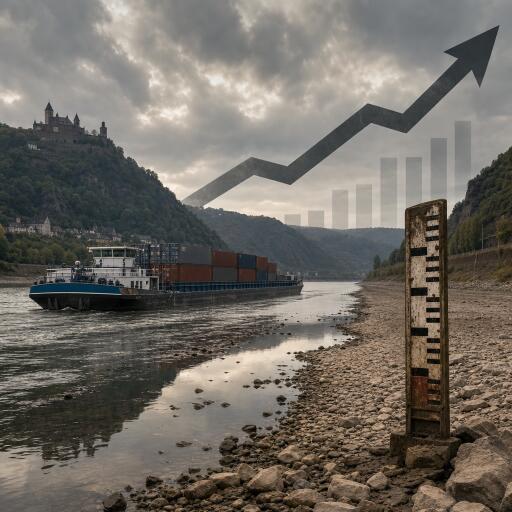
Rhine Drops Below Shipping Threshold as Freight Costs Rise
Water levels on the Rhine River plunged to record lows over the weekend, threatening transport on a key shipping corridor that carries energy and industrial commodities across central Europe. The drop is disrupting barge traffic, tightening capacity, and pushing freight costs higher as shippers scramble to keep fuel and raw materials moving.
Kaub Gauge Slips Below a Key Benchmark
At the critical measuring point near Kaub, the water level fell to 3 centimeters below a closely watched threshold on Saturday. That benchmark is used by shippers and insurers to determine barge loading limits and price adjustments. Once levels dip beneath it, vessels typically must sail lighter to avoid grounding, requiring more trips to move the same volume of cargo and increasing per-ton transport costs.
The Kaub stretch is among the shallowest along the Middle Rhine and often becomes a bottleneck during low-water periods. Even small declines in depth can dramatically cut the payload a barge can carry, slowing deliveries of coal, oil products, chemicals, metals, and agricultural goods. In extreme cases, certain barge types may be unable to transit safely, forcing operators to delay, split, or reroute cargoes.
Energy and Industry Feel the Strain
The Rhine is a supply lifeline for power plants, refineries, chemical complexes, and steel producers located along and beyond its banks. When water levels are depressed, coal and oil shipments may be postponed or rescheduled, and industrial feedstocks can take longer to arrive. Producers often respond by drawing down on-site inventories, but sustained disruptions can compel adjustments to production plans or maintenance schedules.
Low river levels also complicate the movement of heating oil, diesel, and gasoline, potentially tightening regional availability. For agriculture and construction, reduced barge capacity can slow deliveries of fertilizers, grains, and aggregates, adding to seasonal logistics pressures.
Freight Costs Rise as Capacity Tightens
As draft restrictions bite, the effective barge capacity on the Rhine declines. Charter rates and low-water surcharges tend to rise accordingly, reflecting additional trips, longer transit times, and the scarcity of shallow-draft vessels. Some operators reserve specialized equipment for critical cargoes, further constraining space for other shipments.
While barge transport usually offers a cost advantage over rail and trucking for bulk commodities, that gap narrows during low-water episodes. The result is a broad-based lift in logistics costs that can ripple through supply chains and, over time, contribute to higher input prices for manufacturers and utilities.
Rerouting and Contingency Measures
To keep materials moving, shippers commonly activate contingency plans, including:
- Shifting part of the volume to rail and road, where capacity allows, despite higher costs and scheduling challenges.
- Using alternative storage hubs and transshipment points along deeper or less-constrained river sections.
- Prioritizing critical or time-sensitive cargoes and deferring non-urgent shipments.
- Deploying lighter or shallow-draft barges and breaking cargoes into smaller lots to pass tight sections.
These measures help reduce bottlenecks but rarely offset the full capacity loss. Congestion can also spill into rail terminals and highways as demand for alternate modes rises.
Weather Outlook and Recovery Curve
Precipitation in the Rhine basin ultimately determines how quickly levels rebound. Scattered showers may provide short-lived relief, but meaningful improvement typically requires sustained rainfall across tributaries and upland catchments. Even after gauges recover to more comfortable readings, it can take time to clear backlogs, reposition vessels, and normalize schedules.
Why the Rhine Matters
As one of Europe’s most important commercial waterways, the Rhine underpins the competitiveness of industries from the North Sea to the heart of the continent. When water levels drop below critical thresholds, the effects are felt not only by shippers and barge operators but also by manufacturers, energy providers, and ultimately consumers. Episodes like this reinforce the importance of resilient logistics strategies, diversified transport options, and infrastructure planning that accounts for hydrological variability.
Key Takeaways
- Water levels fell to record lows over the weekend, with the Kaub gauge slipping 3 centimeters below a key threshold used to set loading limits and freight pricing.
- Reduced barge drafts are tightening capacity, delaying shipments, and lifting transport costs for energy and industrial commodities.
- Shippers are turning to rail, road, and alternative routing, but these options add costs and face their own constraints.
- Recovery depends on sustained rainfall; even then, clearing backlogs and rebalancing equipment will take time.
Until river conditions improve, freight markets along the Rhine are likely to remain tight, with elevated logistics costs and continued scheduling challenges for energy and industrial supply chains.