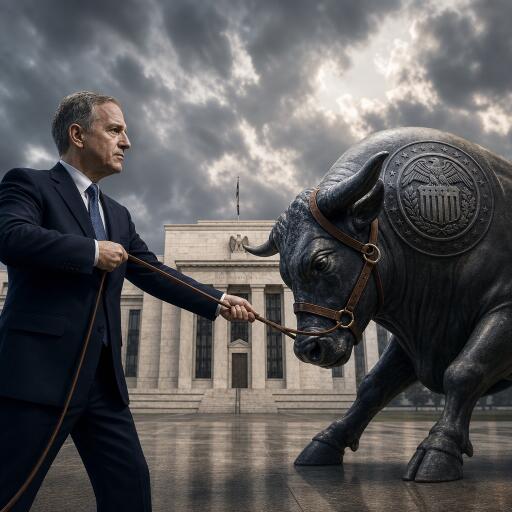
Warsh’s Plan to Tame the Fed
The Federal Reserve, long seen as dominated by left-leaning economists, has a new chairman with an ambitious plan to review and reform the institution. As if to mark a turning point, former Chairman Alan Greenspan died this morning at age 100. The moment evokes Benjamin Franklin’s line: “In this world nothing can be said to be certain, except death and taxes.”
A Passing of the Torch
Appointed by President Ronald Reagan, Greenspan served 19 years across four administrations. His tenure encompassed the so-called Great Moderation from the mid-1980s until 2007, a period defined by low inflation, stock market gains, and strong growth. He also faced criticism for contributing to conditions that preceded the 2008 financial crisis, a blame that has long been debated across the political spectrum. Whatever one’s view, Greenspan’s legacy looms large as the new chair sets out to make his own mark.
Warsh’s Reform Blueprint
Following his first Federal Reserve meeting as chairman, Kevin Warsh launched a broad effort to review the Fed’s tools, assumptions, and communication. He established five task forces aimed at reassessing core elements of central banking and updating how the institution navigates a rapidly changing economy:
- Fed communications
- The Fed’s balance sheet
- Use and reliance on existing data sources
- Productivity and jobs
- Inflation frameworks
Warsh framed their mission succinctly: “They’ll have a straightforward charge — start with first principles, ask hard questions, examine current practice, consider alternatives, and ultimately propose next steps for policymaker consideration.” His objective is “a Federal Reserve that is clear-eyed about its mission, fit for purpose, and focused on the future.”
Shifting a Deeply Entrenched Institution
Reforming the central bank won’t be easy. Analyses in recent years have estimated that, among roughly 780 economists across the Federal Reserve System, Democrats outnumber Republicans by more than 10 to 1, with an even starker imbalance on the Board of Governors. Such ratios suggest strong institutional inertia. Changing the Fed’s trajectory may ultimately require changes in its internal makeup; in the meantime, the new approach appears to emphasize persuasion with data rather than top-down edicts.
Early Signals: Consensus and Less “Forward Guidance”
Warsh’s first meeting produced a notable result: a unanimous 12–0 vote to keep the target federal funds rate at 3.5%–3.75%, even though some officials had previously indicated a preference for a rate hike. That consensus hints at a leadership style capable of aligning diverse views, at least for now.
Another early shift is a move to rein in the Fed’s heavy reliance on “forward guidance” about interest rates. Rather than stoking market swings with predictions and projections, Warsh emphasized a more restrained approach. The Federal Open Market Committee, he said, “will deliver price stability.” He added, “I think financial markets perform best when they react to incoming data. I think the financial markets work less efficiently when they ask a question, ‘How will the Federal Reserve react to that incoming information?’”
This recalibration could reduce speculation-driven volatility and refocus investors on fundamentals, though it also asks markets to live with more uncertainty about the precise path of policy. If successful, it may restore some of the discipline that comes from letting data, not guidance, set the tone.
The Inflation Mandate
Since 2021, the U.S. Bureau of Labor Statistics has estimated cumulative inflation at roughly 28%, a figure that understates the pain many households have felt as certain goods and services climbed even faster. After five years of persistent inflationary pressure, Americans are fatigued — and expecting relief. Warsh’s mandate is therefore as clear as it is difficult: restore price stability without derailing the economy’s underlying momentum.
A successful strategy will likely combine tighter focus on the Fed’s core mission, improved data discipline, and a communication style that is transparent but humble about uncertainty. The task forces suggest a back-to-basics orientation: rebuild the toolkit, reassess the models, and avoid overpromising about the future.
The Road Ahead
Warsh’s plan sets an ambitious agenda: clarify what the Fed says, right-size what it holds, upgrade the data it trusts, link productivity to prosperity, and ensure the inflation framework delivers on price stability. The near-term test will be whether the Fed can sustain consensus while inflation cools decisively, and whether markets can function more efficiently without a steady drip of guidance.
It’s a tall order for any leader, particularly in an institution with deep-rooted norms and a strong internal culture. But the direction is clear: fewer theatrics, more evidence; fewer pronouncements, more performance. If Warsh can deliver that shift — and real progress on inflation — he will begin to tame the Fed’s most unruly challenges and set a steadier course for the economy.