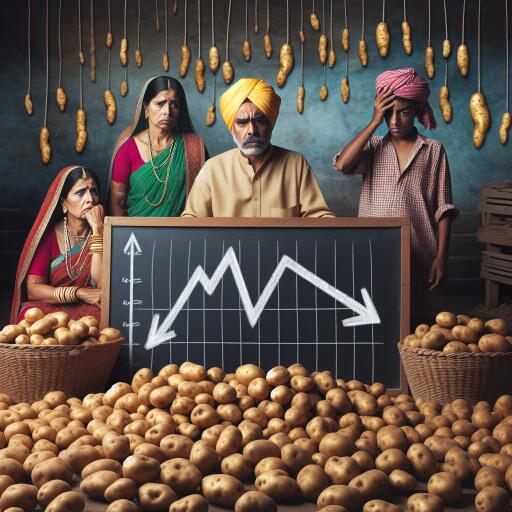
Indian potato prices slump on early season oversupply
Potato prices across India have fallen sharply at the start of the season as fresh arrivals collide with large volumes of last year’s stock still sitting in cold storage. The mismatch has triggered distress sales by growers and driven wholesale and retail rates lower in several key mandis. Traders expect prices to remain under pressure through this month, with a steadier tone likely from next month as more produce moves into storage and daily arrivals ease.
Old stocks keep markets heavy
Market participants say the single biggest drag on prices is the slow clearance of old potatoes from cold storage, even as the new harvest hits mandis. In Delhi’s Azadpur market, for instance, daily offtake is estimated at about 90–100 truckloads, while arrivals have been running at 130–140 truckloads—creating a persistent supply overhang.
Cold storage operators report delays in emptying facilities that would typically be cleared by late November. In West Bengal, storages are still estimated to be holding around five million bags. In Madhya Pradesh, facilities that normally clear in November may not do so until mid-January. Older stock has also been pushed out faster in December to limit decay, adding further pressure on prices.
Steep declines across key mandis
Wholesale prices have slid notably in major hubs over the past month:
- Agra (Uttar Pradesh): down from ₹900–₹1,250 to ₹500–₹650 per quintal.
- Kolkata: down from ₹1,500–₹1,550 to ₹1,100–₹1,200 per quintal.
- Indore: down from ₹500–₹1,400 to ₹300–₹900 per quintal.
- Delhi: down from ₹800–₹1,400 to ₹300–₹900 per quintal.
- Ludhiana: down from ₹1,000–₹1,200 to ₹700–₹750 per quintal.
Retail prices have followed suit. Potatoes that were selling for ₹20–₹25 per kg last month are now broadly in the ₹13–₹20 per kg range, depending on quality and location. In many mandis, table potatoes are trading near ₹5–₹6 per kg, while chip-grade material is around ₹8 per kg.
Production outlook adds to pressure
Favourable weather to date has lifted expectations for a bigger crop, which is also weighing on sentiment. Industry estimates suggest production could rise by about 5% this season, from roughly 58.1 million tonnes last year to potentially over 60 million tonnes. If realized, the larger crop would reinforce the need for timely storage and calibrated market releases to avoid extended gluts.
Farm economics under strain
Growers report that current farmgate prices are hovering around ₹5–₹6 per kg—below estimated production costs of more than ₹8 per kg. With cash flows tight and storages not clearing as usual, many farmers have been forced into distress sales. The gap between arrivals and offtake in wholesale markets has only intensified that pressure.
What could stabilize prices
Traders anticipate some stabilization from next month as the pace of arrivals moderates and a greater share of the crop is moved into cold storage. A steadier supply pipeline, along with improved sorting between table and processing grades, could help firm up mandi rates. However, if storages remain congested or if the crop turns out larger than expected, prices may take longer to recover.
For now, the near-term outlook remains cautious: arrivals are strong, old stock is still clearing, and growers are absorbing the brunt of the decline. The market’s next pivot will likely hinge on how quickly inventories shift into storage and how disciplined releases are in the weeks ahead.