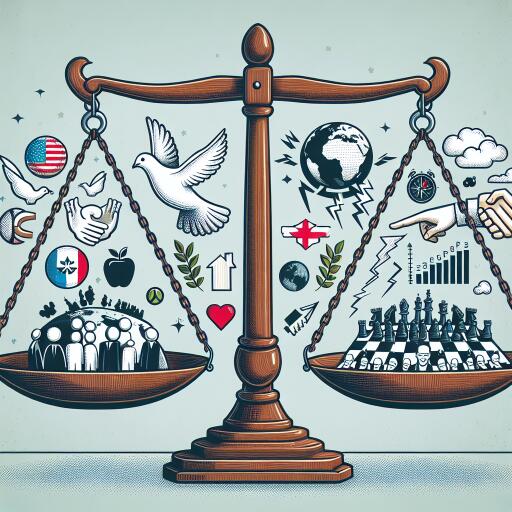
Will US-Iran conflict ease out or explode further? Decoding what comes next
The Middle East is hurtling through a period of profound uncertainty. Iran’s power transition — with Mojtaba Khamenei, son of the late Ayatollah Ali Khamenei, stepping in as Supreme Leader — has intensified questions about whether the region is headed toward de-escalation or a wider confrontation. Energy markets are on edge, Gulf monarchies are recalibrating risk, and India is walking a careful tightrope shaped by geography and national interest.
What Tehran’s new leadership signals
The succession in Tehran is not a standalone event; it unfolds against an already volatile war. Mojtaba Khamenei’s close alignment with the Islamic Revolutionary Guard Corps (IRGC) suggests continuity rather than compromise. The signal is that Iran will keep fighting through a mix of direct capabilities and proxy networks rather than soften under pressure.
On the ground and at sea, this posture manifests as missile and drone launches, harassment of shipping lanes, and the use of allied non-state actors — including Hezbollah, the Houthis and Kataib Hezbollah — to widen the conflict’s footprint. Iran has targeted Gulf-linked interests it sees as aligned with Washington, ensuring the costs of confrontation spill across borders.
Energy shock and global ripple effects
The immediate fallout is being felt in energy markets and supply chains. Oil has spiked to around 117 dollars a barrel, and some projections even warn of a surge toward 150 dollars if the conflict deepens or shipping chokepoints remain at risk. Elevated freight, insurance, and commodity prices are feeding into broader inflationary pressures, reviving fears of a stagflationary hit to the global economy.
Competing definitions of victory
Both sides can still claim victory by their own metrics. For Tehran, survival of the regime and sustained strategic reach through proxies would be enough to declare success. For Washington and its partners, the goal is to degrade Iran’s military and economic infrastructure to the point where it cannot project power effectively.
The decisive question is not the tally of destroyed assets but whether the core power structure in Iran — anchored by the IRGC — remains intact. As long as the IRGC continues to launch drones and missiles, sustain proxies, and pressure maritime routes, the character of the conflict is unlikely to change. Without a fundamental shift in that central pillar, talk of a total US-Israeli victory through regime change remains premature.
A three-sided contest
The war now resembles a triangular struggle: a US–Israel coalition seeking to deter and degrade Iran; Iran pushing back directly and via proxies; and Gulf states absorbing collateral damage while trying to avoid being dragged into open combat. While markets and governments hunt for reassurances on energy and food security, the region sits at an inflection point with no guaranteed off-ramp.
India’s tightrope: restraint, security, and interests
India’s response remains measured, shaped by its energy dependence, diaspora ties, and security compulsions. Despite global narratives of wider unrest, recent Shia processions in Indian cities such as Srinagar, Lucknow and Hyderabad were largely peaceful. New Delhi continues to push for dialogue and de-escalation while focusing on pragmatic priorities: safeguarding sea lanes, supporting friendly Gulf partners, and protecting millions of Indian citizens living and working across the region.
India is, in many ways, a prisoner of geography — with a hostile Pakistan to the west, a strategic rival in China to the north and east, and heavy reliance on imported oil and gas from a turbulent neighborhood. These realities argue for caution: diversify energy suppliers, maintain strategic autonomy, and avoid entanglement in wars it neither started nor can decisively end.
Opportunities amid crisis
- Build resilient logistics: Strengthen trans-shipment and coastal infrastructure — including new or expanded ports on the western seaboard — to create shorter, more secure supply lines for essentials to Gulf states. This bolsters regional food security and positions India as a more central logistics hub in the Arabian Sea.
- Sharpen maritime security: Invest in surveillance, interdiction capabilities, and convoy protocols to protect shipping lanes that are critical to India’s trade and energy lifelines.
- Upgrade defence preparedness: Iran’s persistence with missiles and drones despite decades of sanctions underscores the value of indigenous development in motors, fuels, explosives, guidance, and electronic warfare. Studying how a sanctioned state built and sustained these capabilities can inform India’s own R&D, procurement, and joint-venture strategies.
What to watch next
- IRGC posture: Any reduction in proxy activity, missile and drone launches, or maritime disruptions would be an early indicator of de-escalation. The opposite would signal a grinding, expanded conflict.
- Back-channel talks: Quiet diplomacy involving regional players can open off-ramps even when public rhetoric hardens.
- Energy and shipping costs: A sustained spike toward 150-dollar oil or prolonged insurance surcharges on key routes would deepen global economic stress and raise pressure on all sides to compromise.
- Gulf states’ calculus: Moves to harden infrastructure, coordinate air and missile defense, or mediate between rivals will shape the battlefield and the bargaining table.
The bottom line
The instability surrounding Iran’s leadership transition has not softened Tehran’s stance. With the IRGC at the center of gravity, the conflict is set to persist unless a structural shift occurs. For the United States and its allies, degrading Iran’s reach is possible; forcing regime change is another matter altogether.
India, meanwhile, will likely stick to a disciplined playbook: secure sea lanes and supplies, support friendly partners, protect its diaspora, and stay out of the direct line of fire — all while pressing, however quietly, for dialogue that can cap the costs for a region, and a world, already paying a high price.