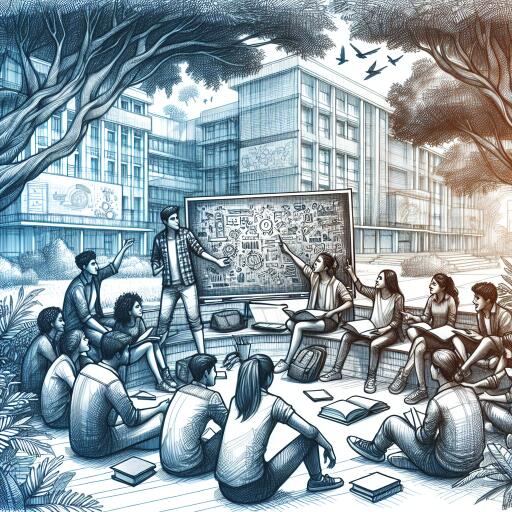
‘Why the people you meet matter more than the courses you take’ | Life in an IIT’
My journey toward the Joint Entrance Examination (JEE) didn’t begin with coaching classes or time tables. It began with a quiet moment on a campus visit that changed how I imagined my future. My elder sister was studying Aerospace Engineering at IIT Bombay, and walking through the hostels and corridors made something click: if I studied engineering, I wanted to study at an IIT.
Coming from a family with an engineering background, the idea was familiar, but the choice after Class 10 between science and commerce still felt weighty. My father simplified it: science would keep more doors open later—research, jobs, or even management. That perspective settled it. Once I chose science, preparing for JEE felt like the natural next step, especially with my sister’s experience lighting the way.
Growing up across cities
I studied in multiple schools from nursery to Class 12 as my father’s job moved us every couple of years—Sonipat, Kochi, Gurgaon, Ahmedabad, Vadodara, Mumbai, Chandigarh. Most of my schooling happened at Delhi Public School in Vadodara and later at Ryan International School in Mumbai. Constantly starting over taught me to read people, adapt fast, and appreciate how different communities think and live. I never restricted myself to academics; I gravitated toward sports, cultural events, and anything that pushed me to participate and connect.
Preparing for JEE in a pandemic
My serious JEE preparation began after Class 10—right when the pandemic disrupted everything. I had always thrived in classrooms and coaching centers, but overnight, learning moved to a screen. Midway through Class 11, I shifted from Vadodara to Mumbai for an integrated coaching program and built a routine: classes from morning till afternoon, a break to recharge—talk with family, play a sport, read—and focused self-study in the evening. Through it all, my family’s support was constant. There was no pressure about ranks, only encouragement to do my best. I eventually secured an All India Rank of 14,459 in JEE Main and 11,452 in JEE Advanced.
Choosing the IIT ecosystem over a specific branch
From the outset, I wasn’t fixated on a branch. I wanted the IIT ecosystem—the pace, the people, the possibilities. While filling my JoSAA preferences, I listed branches across IITs in the order of campuses I preferred. When I was allotted Biological Sciences at IIT Madras, I hesitated. I hadn’t studied biology in Classes 11 and 12. Conversations with seniors changed that. Many had joined without a deep biology background and were thriving. Reading more about the field—especially the growth of biotechnology—made the decision feel right.
First impressions of IIT Madras
I joined IIT Madras in 2022. Moving to Chennai on my own felt different from a vacation—it was my first true step into independence. The campus struck me immediately: a lush, almost-forest environment where deer crossed your path as casually as students on bicycles. Those first weeks were full of exploration—late-night rides on tree-lined roads, music sessions, poking into departments out of curiosity, and discovering the sports facilities.
I was allotted a single room as a fresher—rare, and both a blessing and a small miss. I loved the personal space but occasionally wished for the classic roommate stories. The mess food turned out better than the stereotypes suggested, and campus outlets and food trucks filled in the gaps. Meeting people from every part of the country made the place feel like home fast; hostel corridors buzzed with ideas, debates, and laughter.
Beyond the classroom
I arrived with the intention to explore. I signed up for NSO basketball to return to a sport I’d paused during JEE prep and performed as a guitarist at Freshie Night, which helped me settle in. Volunteering at Saarang and Shaastra revealed how large student-run festivals actually operate—messy, intense, and exhilarating. The Entrepreneurship Cell became my anchor: what began as an associate manager role turned into a multi-year journey, eventually leading the team as executive head.
Positions of responsibility shaped my institute life as much as my courses did. I treated academics seriously but pragmatically—studying with purpose when needed—while investing significant energy in building teams, running initiatives, and solving real problems. After two pandemic years indoors, campus life rebuilt my confidence. Working with batchmates, collaborating late into the night, and simply talking to people made me more open, resilient, and curious.
What stood out most was the senior–junior culture. Seniors were approachable and generous with guidance—about academics, clubs, internships, or career decisions. Over time, it became clear that the network you build—friends, seniors, mentors—is one of the most valuable outcomes of an IIT education.
Internships, direction, and what comes next
I explored different industries through internships: business development at a consumer brand, investment analysis at a venture firm, and product roles at fintech companies, followed by an on-campus product management internship. Each exposed me to a new side of how organizations work—from founder-level problem solving to the discipline of shipping products. These experiences clarified my interests: after IIT, I see myself in consulting or product management, with a longer-term ambition to build something of my own in the consumer space. My time with entrepreneurship on campus has a lot to do with that.
The real lesson: people over courses
Looking back, the biggest shift in my perspective is simple: IIT is less about a specific syllabus and more about the people and environments you choose to immerse yourself in. Student organizations function like startups—fast, chaotic, and deeply educational. You learn to lead, to follow, to disagree constructively, to execute under pressure, and to back yourself.
The confidence you gain doesn’t come only from grades. It comes from trying things you never imagined doing, from the seniors who nudge you forward, from teammates who rely on you, and from friends who keep you grounded. Courses teach you frameworks. People teach you how to use them. And in the long run, that makes all the difference.