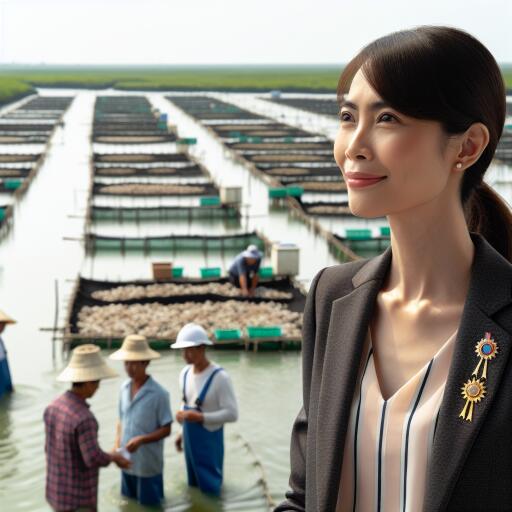
Fisheries Secy reviews Bhimavaram cluster, addresses farmer issues
Union Fisheries Secretary Abhilaksh Likhi led a review of the Bhimavaram brackishwater aquaculture cluster developed under the Pradhan Mantri Matsya Sampada Yojana (PMMSY), engaging directly with shrimp and fish farmers to understand on-ground constraints and identify solutions. The session focused on market access, credit, infrastructure, and technology adoption, with a strong push to strengthen the aquaculture value chain end-to-end.
Broad-based participation and feedback
The hybrid meeting brought together officials from the Department of Fisheries (Government of India and Government of Andhra Pradesh), representatives from fisheries clusters across States and Union Territories, scientists from ICAR fisheries institutes, and stakeholders from NFDB, CAA, MPEDA, and NABARD. Farmers, exporters, and cooperatives shared firsthand inputs on production challenges, market linkages, and infrastructure gaps.
Priorities set by the Union Fisheries Secretary
Appreciating the robust participation, Likhi underscored the importance of farmer feedback in shaping responsive policies at both Central and State levels. He commended Andhra Pradesh’s achievement of 64 lakh tonnes of fish production and reiterated support for the Bhimavaram cluster’s continued growth. Key focus areas highlighted included:
- Strengthening the value chain across pre-production, production, and post-harvest stages
- Promoting domestic fish consumption through institutional tie-ups
- Accelerating technology adoption and improving traceability systems
- Deepening export linkages to enhance market competitiveness
Official perspectives on growth, standards, and finance
Special Chief Secretary B Rajsherkhar emphasized the sector’s role in the blue economy and the need to align with international quality and compliance norms. Joint Secretary Sagar Mehra noted that fisheries clusters are being shaped as growth engines that integrate production, processing, and export, while calling for better infrastructure, easier credit, and faster technology uptake.
ICAR Deputy Director General J K Jena highlighted India’s status as the world’s second-largest fish producer and pointed to Bhimavaram’s potential to emerge as a leading aquaculture hub with a clear emphasis on sustainability.
Rama Shankar Naik, Commissioner of Fisheries, Andhra Pradesh, outlined operational priorities: meeting global quality standards, promoting value-added seafood to raise farmer incomes, desilting and clearing creeks and drainage systems to maintain water quality and reduce disease, and scaling Good Aquaculture Management Practices. He also stressed the need for forming Farmer Producer Organizations (FFPOs), expanding laboratory facilities, and sought a reduction in GST on aerators to lower input costs.
Dr. Bijay Kumar Behera, Chief Executive of the National Fisheries Development Board, presented the next five-year roadmap for the Bhimavaram cluster and shared expectations from stakeholders across the value chain.
What farmers and exporters are asking for
Farmers welcomed direct support under PMMSY but flagged several gaps that need targeted interventions:
- Stronger market linkages and promotion of domestic consumption, including inclusion of fish and seafood in government canteens, hospitals, and mid-day meal programs
- Stricter regulation and monitoring of broodstock and seed quality to curb disease risks, alongside introduction of pathogen-resistant broodstock
- Better access to institutional credit; requests were also raised to consider income tax treatment for aquaculture on par with agriculture
Exporters pointed to constraints affecting competitiveness even in a “Town of Export Excellence”:
- Last-mile connectivity from farms to processing units and other infrastructure upgrades
- Rising shipping tariffs and limited flexibility to raise unit prices in global markets
- Greater utilization of by-products to improve value addition
About the Bhimavaram brackishwater cluster
Brackishwater aquaculture contributes roughly 15% of India’s total fish output and a disproportionately higher share of export earnings, driven by high-value species such as shrimp. Concentrated in coastal and estuarine belts, the segment has catalyzed productivity gains, diversified rural incomes, and created jobs through technology-led practices and better market integration.
The Bhimavaram Brackishwater Cluster in West Godavari district, Andhra Pradesh—formally notified under PMMSY on 11 March 2025—is among the country’s largest and most intensive aquaculture ecosystems. Spanning about 53,861 hectares and encompassing over 42,000 ponds, the cluster focuses on export-oriented shrimp species including Penaeus vannamei and Penaeus monodon. With average productivity around 8 tonnes per hectare—well above the national mean—the cluster significantly supports seafood exports and sustains a large farming community through its favorable salinity, warm climate, and established infrastructure.
Path forward
The review underscored a shared agenda: improving water and seed quality, adopting resilient technologies, expanding lab and diagnostic services, and upgrading logistics from pond to port. With coordinated efforts on compliance, financing, and infrastructure, the Bhimavaram cluster is well-positioned to advance sustainable growth, enhance farmer incomes, and strengthen India’s footprint in global seafood markets.