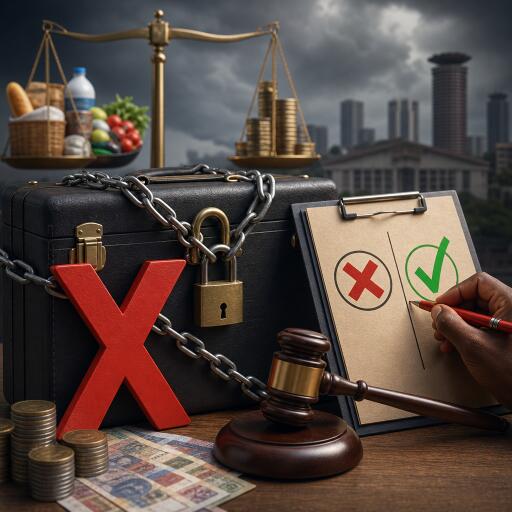
“Finance bill 2026 must be rejected or amended,”- Thang’wa
Kiambu Senator Karungo Thang’wa has urged Parliament to reject or radically amend the Finance Bill 2026, warning that its current form could trigger job losses and slow Kenya’s industrial growth.
The senator argued that the bill fails to reflect the interests of workers, young people, and local manufacturers. He said it should have been designed to spur employment and industrial expansion, rather than suppress them.
“Finance Bill 2026 must be rejected or amended to save Kenyan jobs.”
“This bill should have been a jobs bill. It should have been an industry bill. It should have been a youth livelihoods bill.”
Thang’wa contended that, as drafted, the proposals work against local production and risk dismantling the competitive advantage of domestic firms.
“It is a jobs destruction bill. It is an industry-killing bill. It is a bill that punishes local assembly, rewards importation and threatens to render our youth jobless.”
Concerns over local assembly and imports
The senator highlighted the treatment of locally assembled phones and electric motorbikes as a prime example of policy imbalance. He said the tax framework disadvantages domestic manufacturers while favouring fully built imports.
“Why is the government taxing local assembly companies heavily while empowering the importation of finished goods?”
Risks to jobs, investment, and industrialisation
Thang’wa warned that, without significant changes, the bill could reverse recent gains in job creation and industrialisation. He cautioned that companies might close, assembly lines could fall silent, and investors could pull back, resulting in widespread factory job losses.
“If this bill passes as it is, companies will close, assembly lines will go silent, investors will withdraw and factory jobs will be lost.”
“A country cannot import its way into industrialisation. A country cannot tax its factories to death and still claim to be creating jobs.”
Appeal to Parliament
The senator called on Members of Parliament to intervene decisively by either rejecting the Finance Bill 2026 or introducing substantial amendments to protect local industry and employment.
“Reject or radically amend the Finance Bill 2026. Save Kenyan jobs. Save local assembly. Save the economy.”
Thang’wa maintained that his stance reflects support for workers, boda boda riders, manufacturers, and young entrepreneurs across the country, emphasizing that public policy should strengthen—rather than undermine—Kenya’s industrial competitiveness and youth livelihoods.