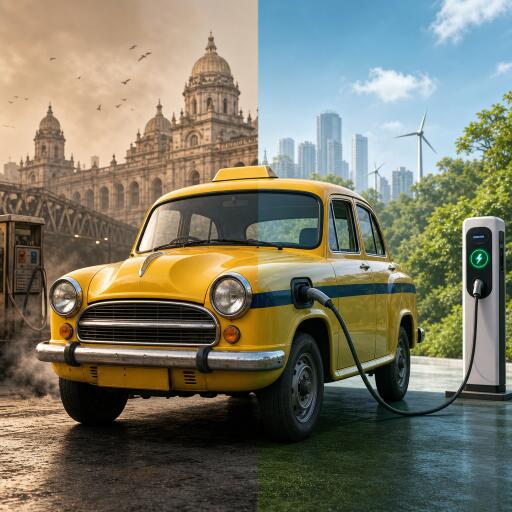
Kolkata’s Iconic Ambassador Yellow Taxi Goes Electric: ICE To EV Conversion For Just Rs. 2.5 Lakh [Video]
The Hindustan Ambassador is woven into India’s automotive heritage, and nowhere is its legacy stronger than in West Bengal. Kolkata’s bright yellow Ambassador taxis once defined the city’s streetscape. After regulations restricted commercial vehicles older than 15 years, many of these classics began disappearing. A new initiative aims to preserve the city’s character while cutting emissions—by converting these beloved taxis from internal combustion engines to electric power.
The Initiative: Classic Form, Clean Heart
An engineering team from Jadavpur University has collaborated with West Bengal–based startup Pointo to develop an electric conversion for legacy Ambassador models, including the Classic, Grand, Avigo, and Encore. The goal is simple: retain the Ambassador’s unmistakable look and feel while replacing its aging drivetrain with a modern, zero-emission setup.
One of the biggest early challenges was sourcing parts for a car long out of production. The team spent months engineering a layout that would accommodate new electrical components without altering the Ambassador’s silhouette or cabin character. The result is a prototype that looks virtually identical to a factory Ambassador on the outside, with the transformation hidden beneath the sheet metal.
What Changes Under the Bonnet
The engine, gearbox, and related mechanicals are removed and replaced with an electric motor and battery packs. To maintain balance and handling, Pointo has installed one battery pack under the bonnet and another in the boot. This dual-pack layout distributes weight more evenly than a single large battery, helping the car feel stable and predictable on Kolkata’s roads.
Battery Tech and Swapping Convenience
The prototype uses LFP (lithium iron phosphate) batteries known for durability and safety. A key feature is battery swapping: instead of waiting to recharge, drivers can replace depleted packs at dedicated stations and get back on the road in minutes. For commercial taxi operators, this minimizes downtime and keeps daily earnings intact.
Range, Usability, and Driving Experience
- Claimed single-charge range: up to 200 km
- Battery life: approximately 5 years (subject to usage and conditions)
- Weight distribution: dual battery placement for better balance and handling
While detailed performance figures aren’t the focus, the emphasis is on dependable city use, predictable handling, and a driving experience that remains familiar to Ambassador veterans—only quieter and cleaner.
Cost: From Prototype to Affordable Conversions
The prototype reportedly cost around Rs 4.5–5 lakh to build. With scale and standardized kits, the team targets a conversion cost of about Rs 2.5 lakh. That price point could make EV retrofits accessible to a broad base of taxi owners and enthusiasts keen to keep their Ambassadors on the road legally and economically.
Certification and Rollout Plans
The project has applied for ARAI certification. Once approved, the plan is to work with taxi operators and private owners to convert older diesel Ambassadors in Kolkata into road-legal EVs. The long-term vision includes extending the service to other cities across India where Ambassadors still hold cultural or practical value.
Why This Matters for Kolkata
- Preserves a cultural icon: Keeps the classic yellow Ambassador taxi alive on city streets.
- Cuts urban pollution: Zero tailpipe emissions help improve air quality without sacrificing legacy.
- Supports livelihoods: Battery swapping and lower running costs can help drivers stay productive.
- Complies with regulations: EV conversions offer a legal path forward for vehicles affected by age-based restrictions.
The Road Ahead
If certification proceeds as planned and conversion costs fall to the targeted level, Kolkata could see a new fleet of electric Ambassadors—cars that look timeless yet run on modern, clean technology. It’s a compelling blueprint for cities seeking to balance heritage with sustainability: celebrate the past, while engineering a cleaner future.