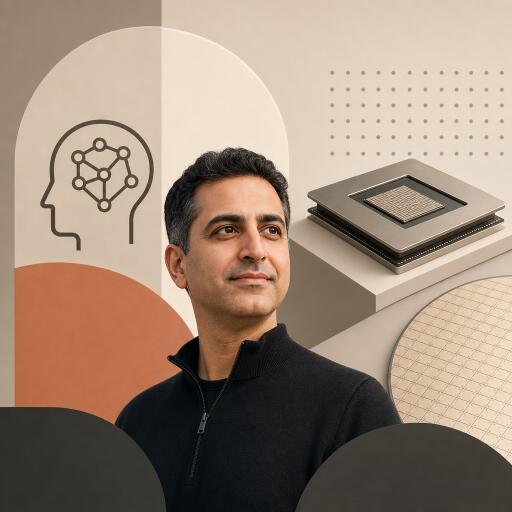
Anthropic hires Google chip veteran Amir Salek amid in-house semiconductor push
Anthropic has hired Amir Salek, a veteran of Google’s custom chip program, as the company accelerates its move toward developing its own semiconductors. Salek joins Anthropic’s compute team and will report to James Bradbury, bringing deep expertise from years of building high-performance AI accelerators.
A veteran of Google’s TPU era
At Google, Salek led the Tensor Processing Unit (TPU) business until 2022 and played a central role in delivering the first seven generations of TPU chips. His experience spans hardware roadmapping, large-scale deployment, and aligning silicon design with rapidly evolving AI workloads—skills directly relevant to Anthropic’s ambitions.
Why Anthropic is moving to custom silicon
Anthropic currently sources compute from multiple suppliers, including Nvidia, Google, and Amazon. As AI models grow more demanding and chip supply remains tight, the company has been actively recruiting for roles linked to an in-house silicon effort. Building custom chips could help Anthropic:
- Mitigate supply constraints by securing more predictable access to compute
- Tailor hardware to the specific needs of its AI models and research roadmap
- Optimize performance, latency, and efficiency across training and inference
- Gain tighter integration between software frameworks and underlying hardware
Expanding compute through partnerships
Alongside its internal chip initiative, Anthropic is broadening access to computing infrastructure through agreements with chipmakers and data center operators. The company has an agreement with UK-based chip startup Fractile for an initial order of about $250 million, with the potential to scale the deal further. Anthropic has also entered into capacity arrangements with Riot Platforms and Volta Infra Holdings to secure additional data center resources.
Competitive landscape
Anthropic’s move mirrors a broader industry shift toward bespoke AI hardware. OpenAI, for example, is pursuing its own chip strategy, including Jalapeno—a processor developed with Broadcom—and plans to deploy it later this year. As leading AI labs race to improve performance and control costs, in-house silicon has become a strategic lever for differentiation and long-term resilience.
Salek’s broader track record
Before joining Anthropic, Salek served as a senior managing director at Cerberus Capital Management following his tenure at Google. He has also previously worked at Nvidia, adding to a résumé that spans both chip design and large-scale AI infrastructure. At Anthropic, Salek’s mandate will center on scaling compute and aligning the company’s hardware strategy with its next generation of AI systems.
With Salek on board and new capacity agreements in place, Anthropic is positioning itself to better meet surging compute demand while laying the groundwork for long-term hardware independence.