Semicon India 2026 Highlights Expansion of India’s Chip Ecosystem – OpenGov Asia
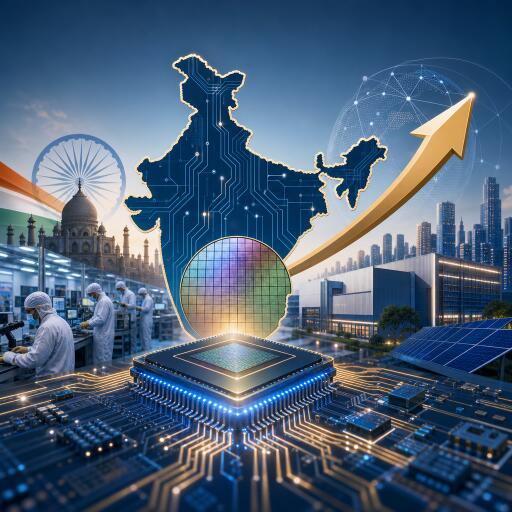
Semicon India 2026 concluded in New Delhi after three days of high-level discussions, partnerships and industry engagement aimed at accelerating India’s semiconductor journey. Organised by the Ministry of Electronics and Information Technology, the event drew more than 51,000 registrations and approximately 40,000 attendees, with participation from representatives of 52 countries. The conference underscored India’s push across design, fabrication, advanced packaging, research and talent development to build a resilient, end-to-end chip ecosystem.
Policy Momentum: From Planning to Production
Prime Minister Narendra Modi inaugurated the event, marking India’s shift from policy formulation to on-the-ground production. During the conference, commercial production lines at facilities in Mohali and Surat were virtually inaugurated, bringing the number of operational semiconductor units approved under Semicon 1.0 to five.
Looking ahead, the government detailed the transition to Semicon 2.0, a programme designed to expand capabilities across the full semiconductor value chain. With an allocation of ₹1,27,500 crore, Semicon 2.0 is organised around six pillars: design; machinery and materials; new fabrication facilities; advanced packaging; research; and talent development. This direction aligns with national efforts to bolster advanced manufacturing and strategic technologies.
Showcase of Ecosystem Depth
Held at Yashobhoomi from 17 to 19 September 2026 under the theme “Silicon to Systems: Building the Ecosystem,” the fifth edition featured more than 600 exhibitors and around 300 international participants. Six country pavilions—Japan, South Korea, Malaysia, the Netherlands, Singapore and Sweden—joined 12 Indian state pavilions, alongside a startup pavilion and dedicated zones for workforce development and innovation. The scale and diversity of exhibits highlighted the breadth of opportunities from chip design and tooling to materials, metrology and systems integration.
Collaborations Across the Value Chain
The conference hosted 56 memoranda of understanding, announcements and strategic initiatives spanning semiconductor design, fabrication, packaging, equipment, materials, logistics, artificial intelligence, high-performance computing and skills development. A core theme was strengthening supply chain resilience and deepening domestic research and manufacturing capacity.
Sessions also emphasised building the broader ecosystem that supports fabrication, including semiconductor gases and chemicals, precision manufacturing, intellectual property, applied research and workforce training. Policymakers, industry leaders and researchers discussed linking chip manufacturing with electronics systems design, academic institutions and startup networks to accelerate innovation and commercialisation.
Research, Startups and Talent
The final day spotlighted sustainability, technology commercialisation, workforce readiness and deep-tech entrepreneurship. A recurring message was the need to bridge semiconductor R&D and intellectual property with manufacturing, procurement and investment frameworks to advance from prototypes to scalable production.
Under the Chips to Startup Programme, the Digital India RISC-V Grand Challenge drew 1,236 teams with 5,045 participants, recognising solutions built on indigenous Vega and Shakti processor-based systems-on-chip. Startup pitch sessions and hackathons promoted collaboration among students, researchers, investors and industry, translating ideas into deployable solutions.
More than 3,800 team registrations from over 900 colleges participated in semiconductor-focused hackathons conducted with academic and industry partners. Participants tackled practical design and engineering challenges, with winners receiving internships, software access and computing resources to further develop their projects.
Global Partnerships
International engagement was central throughout the event. Country roundtables with the United States, Japan, Singapore, Europe, South Korea and Malaysia explored manufacturing partnerships, equipment and materials supply chains, advanced packaging, investment opportunities and collaborative research. The India–Malaysia dialogue focused on outsourced semiconductor assembly and testing, advanced packaging and supply chain cooperation, while other bilateral tracks examined technology collaborations and talent development to diversify networks and reinforce regional resilience.
Outlook
Semicon India 2026 significantly expanded on the previous year’s edition, reflecting rising global participation and sustained policy focus on semiconductor capabilities. The event complemented national measures to scale digital infrastructure and catalyse emerging technologies. With new production lines coming online, a comprehensive Semicon 2.0 roadmap and a strong pipeline of partnerships, India is positioning itself to grow chip design and manufacturing capacity, strengthen supply chains and cultivate the skilled workforce needed to compete in a rapidly evolving global industry.