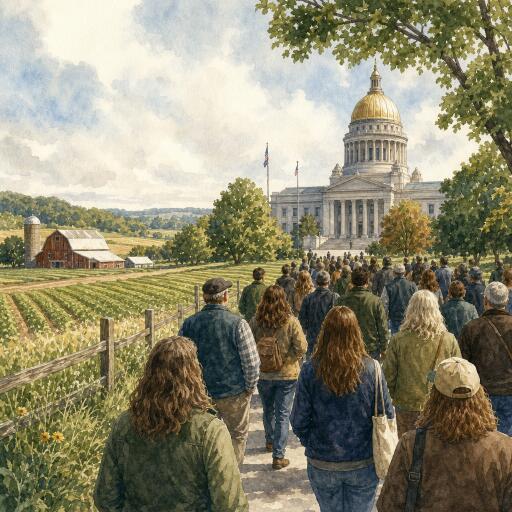
Farmland Preservation Advocacy Day Draws Around 150 Advocates
Raleigh, N.C. — Agriculture Commissioner Steve Troxler, staff from the North Carolina Department of Agriculture and Consumer Services’ Farmland Preservation program, and a broad coalition of stakeholders convened in the capital on Wednesday to spotlight the urgency of protecting working lands and to call for stronger, sustained investment in land conservation.
Roughly 150 advocates fanned out across the General Assembly to meet with legislators, sharing why farmland preservation is critical to North Carolina’s economic vitality, food security, and the long-term health of rural communities. Many emphasized that keeping land in production today safeguards opportunities for future generations.
Commissioner Troxler pointed to the robust turnout as evidence of growing, statewide momentum to invest in preservation, urging leaders to take a forward-looking approach that keeps agricultural land available for farming in the decades ahead.
North Carolina still boasts more than 8 million acres of working farmland and forests, but those acres are under mounting pressure. Rapid residential and commercial development is consuming some of the state’s most productive soils. Emerging land uses tied to technology infrastructure—such as data centers—are also intensifying competition for suitable sites, fueling concern about how future land demand may affect agriculture.
At the center of the state’s response is the Agricultural Development and Farmland Preservation Trust Fund. The program supports farming, forestry and horticulture by:
- Purchasing agricultural conservation easements that permanently protect farmland and forestland from non-agricultural development
- Funding public and private initiatives that help family farms remain profitable and sustainable
- Backing conservation projects that keep land actively producing food, fiber and other agricultural products
Since its launch in 2006, the Trust Fund has invested $118 million to permanently conserve more than 42,000 acres of farm and forestland across North Carolina. Demand, however, far outpaces current resources. In the most recent grant cycle, local partners and landowners submitted roughly $59 million in requests for preservation projects; only $3.1 million in new funding was available. The shortfall left many ready-to-go conservation opportunities—and the working lands they would protect—without a path forward.
Advocates used their day at the legislature to ask for concrete steps that would close that gap and secure more land for production agriculture. Their priorities include:
- Increasing recurring funding for the Agricultural Development and Farmland Preservation Trust Fund to $25 million
- Matching $11 million in federal dollars to leverage partnership projects statewide
- Providing $1 million for the Enhanced Voluntary Agricultural Districts program to strengthen local farmland protection
- Extending and expanding the state conservation tax credit to encourage more landowner participation
Supporters argue these investments will deliver near- and long-term returns: preserving high-quality soils, anchoring rural economies, maintaining local and regional food supply chains, and sustaining North Carolina’s heritage as a leading agricultural state. They also note that acting now is more cost-effective than trying to reclaim lost ground later, as development pressures continue to rise.
As the legislative session advances, farmland preservation proponents plan to continue engaging lawmakers and the public, emphasizing that strategic, recurring investment today can permanently protect the land base that North Carolina farmers need to thrive tomorrow.