Korean Banks Show Up in Force as Ripple Headlines XRP Seoul 2026 – Startup Fortune
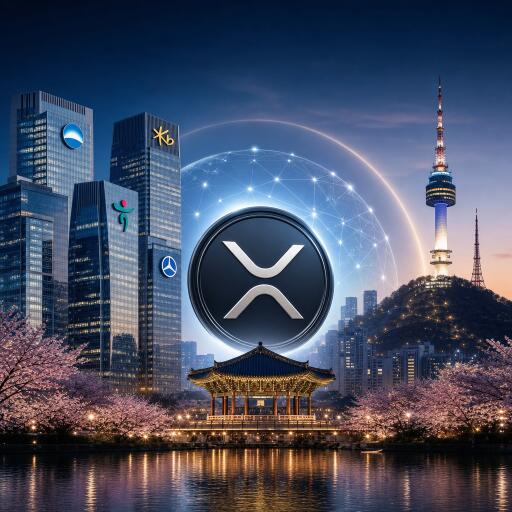
South Korea’s biggest banks didn’t just attend XRP Seoul 2026—they took the stage. Woori Bank, Kakao Bank, Kyobo Securities, and Kbank appeared alongside Ripple leadership at the Grand Hyatt Seoul during Korea Blockchain Week, signaling a concrete, public commitment that goes beyond a press release or a quiet pilot.
Who Showed Up—and Why That Matters
Ripple president Monica Long and RippleX senior vice president Markus Infanger headlined the conference, with Woori Bank’s senior manager Seunghoon Han and Kakao Bank’s manager Leo Lee among the named participants. Crucially, there’s no separate “XRP Asia” entity behind the event; this was a Ripple-organized conference with Korean financial institutions as speakers and partners, not as backers of a new brand.
The appearances are noteworthy because they reflect momentum already in motion beneath the surface. The action isn’t just onstage—it’s in the infrastructure that’s quietly gone live in the background.
The Real Story: BDACS Custody Rails Are Live
In February, Ripple partnered with BDACS, a regulated South Korean digital asset custodian, to bring institutional clients onto Ripple Custody. By early August, BDACS began supporting both XRP and RLUSD—Ripple’s dollar-pegged stablecoin—for institutional holders. BDACS is integrated with major Korean exchanges, including Upbit, Coinone, and Korbit, enabling compliant movement of assets across the country’s largest venues under the Financial Services Commission’s guidelines.
Woori Bank is directly tied to this infrastructure. It partnered with BDACS in December to co-develop digital asset custody services, well before Ripple’s integration was announced. So when Woori appears at XRP Seoul with a speaker slot, it’s not a first step into crypto—it’s the public face of a bank already active in the custody layer, discussing where its strategy goes next.
KRW1 Stablecoin Extends Real-World Reach
BDACS has launched KRW1, a won-denominated stablecoin reportedly backed 1:1 by reserves at Woori Bank. Payments firm Rain has enabled KRW1 spending at a vast network of Visa merchant locations worldwide. Even as South Korea finalizes legislation for won stablecoins, the KRW1 rollout highlights how quickly rails are being built to connect institutional-grade custody to everyday payment endpoints.
The takeaway: a bank speaking on a panel is marketing; a bank co-building custody and payments infrastructure is operations. Woori is doing the latter, and XRP Seoul 2026 is where that operational reality was stated plainly.
Why Banks Are Building, Not Just Investing
Across 2026, a broader pattern has emerged: banks are building on crypto rails rather than treating digital assets as a passive allocation. From multi-bank stablecoin initiatives to state-chartered pilots, institutions are moving beyond exposure and into infrastructure. These decisions are “stickier” than a position in a token—once custody, settlement, and compliance pipelines are integrated, they become part of the financial plumbing.
XRP’s Moment: Demand and Deployment
For XRP specifically, the timing lines up with tangible demand signals and institutional readiness. Spot ETF inflows in the United States have remained steady, while XRP’s price resilience through supply unlocks suggests a market increasingly driven by structured demand rather than pure speculation. At the same time, Korea’s institutional rails for XRP and RLUSD are now live through BDACS, giving banks and asset managers a compliant pathway to hold and move these assets domestically.
This is not a victory lap that declares XRP the single preferred blockchain among banks. Rather, it’s evidence that years of targeted enterprise outreach are bearing fruit in a market where XRP already sees heavy retail and institutional interest. The presence of named bank employees on a Ripple stage becomes a reliable signal to look for a concrete integration, pilot, or deployment sitting behind it. In Woori’s case, that box is already checked.
Ripple’s Regulatory Footing in the EU
Adding to the momentum, Ripple has secured full authorization under the EU’s MiCA framework via Luxembourg’s CSSF. Paired with its existing electronic money institution status, this gives Ripple a streamlined path to operate across the EU’s single market. For institutions weighing counterparty and compliance risk, that kind of regulatory clarity is a meaningful de-risking event.
The Bottom Line
- Korean banks didn’t just attend—they partnered and presented, signaling real operational interest.
- BDACS custody for XRP and RLUSD is live, integrated with major Korean exchanges for compliant institutional flows.
- Woori Bank’s early partnership with BDACS underscores that this is infrastructure, not optics.
- KRW1’s expansion into mainstream payments channels illustrates how quickly rails are connecting to real-world spend.
- Ripple’s EU licensing position further strengthens institutional confidence in building on its stack.
Strip away the conference buzz, and a clear picture remains: Korean banks are moving from watching crypto to wiring it in. XRP Seoul 2026 simply made that shift visible.