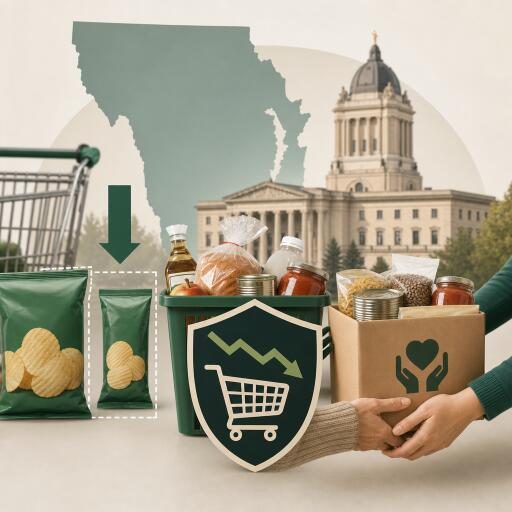
Manitoba plans to tackle ‘shrinkflation,’ curb predatory pricing and support food bank
Manitoba is rolling out a set of actions aimed at helping households cope with high grocery costs. A provincial study on food prices, commissioned earlier this year and released Monday, outlines measures to make “shrinkflation” easier to spot, curb predatory pricing, improve data transparency on food affordability, support food banks, and explore a new grocery option in Winnipeg’s core.
Shining a light on shrinkflation
The province plans to introduce legislation requiring clear unit pricing in grocery stores—such as price per 100 grams or 100 millilitres—so shoppers can compare products across different sizes and brands. With standardized unit labels, customers can more easily detect when a product’s package gets smaller but the price stays the same or rises. The intent is to help families make informed choices quickly at the shelf and push retailers toward more transparent pricing practices.
Strengthening access to nutritious food
To tackle food insecurity and reduce waste, Manitoba is investing $2.5 million in Harvest Manitoba’s planned Manitoba Food Transformation Centre. The hub will receive surplus or donated food from grocers and agricultural producers and convert it into healthy, ready-to-use ingredients and meals for food banks. By stabilizing supply and improving the quality and variety of items available to food bank users, the centre aims to turn donations into dependable, nutritious options for families.
Cracking down on predatory pricing
The province is targeting price tactics that leave consumers vulnerable, including “personalized algorithmic pricing” that can charge different shoppers different prices online or in store. Earlier this year, Manitoba introduced the Business Practices Amendment Act, which classifies this kind of personalized pricing as an unfair business practice. The grocery study highlights the risk these tactics pose to consumers and positions the legislation as a tool to promote fairer competition and more predictable pricing at the till.
Publishing the true cost of a healthy diet
Manitoba will begin publicly reporting how much it costs to feed a family a nutritious diet, reviving a practice that had been discontinued. By tracking and releasing this data, the province aims to give households, advocates, and policy-makers a clearer picture of real-world pressures on food budgets. Transparent reporting is intended to guide both individual decisions and government responses as prices change.
Improving access in food deserts
The study echoes ongoing concerns about food deserts—areas where full-service grocery options are scarce—and points to a potential new grocery store in downtown Winnipeg as one solution. Expanding access in the city’s core would help residents who currently face higher costs and limited selection due to distance, transportation hurdles, or reliance on smaller retailers with fewer fresh options.
What the study says and what comes next
The 40-page Manitoba Grocery Price Study sets out a range of interventions and potential policy options, from pricing transparency to food security infrastructure. It focuses on practical, near-term steps that together could improve affordability and access. Finance Minister Adrien Sala said the package is designed so the combined effect of these measures adds up to meaningful savings on household grocery bills.
- Introduce mandatory unit pricing to expose shrinkflation and help comparison shopping.
- Support a provincewide hub to transform donated food into nutritious meals for food banks.
- Enforce rules against personalized algorithmic pricing to curb predatory practices.
- Regularly measure and publish the cost of a nutritious food basket for Manitoba families.
- Explore a full-service grocery option in downtown Winnipeg to reduce food deserts.
As the province moves to implement these measures, it plans to work with retailers, producers, food security organizations, and community partners to ensure new rules are practical and that supports reach families quickly. The overarching goal is a grocery market that is more transparent, more competitive, and fairer for Manitobans—whether they are comparing prices on the shelf, relying on food bank services, or looking for a full-service store in their own neighborhood.