Queen Máxima Calls For Stronger Financial Health At World Bank Group Savings Roundtable In Accra – MyDailyNewsOnline
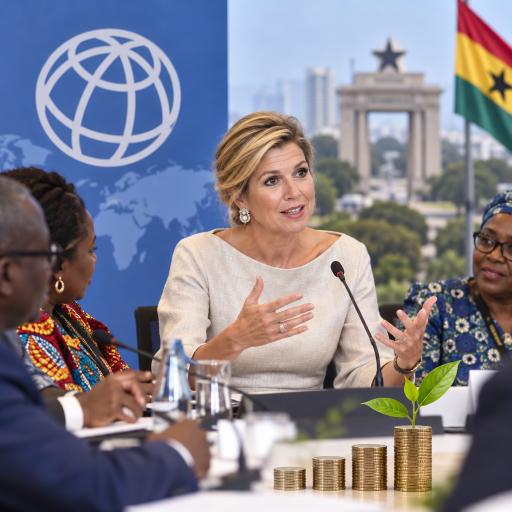
The World Bank Group has hosted Her Majesty Queen Máxima of the Netherlands and senior representatives from government, regulatory institutions and the financial sector at a high-level roundtable in Accra.
Queen Máxima participated in her capacity as the United Nations Secretary-General’s Special Advocate for Financial Health. The meeting focused on expanding savings opportunities, pension coverage and access to capital markets, particularly for informal-sector workers.
Held at the World Bank Group’s Accra office, the event was organised jointly by the World Bank and the International Finance Corporation under the theme, “From Savings to Prosperity: Informal-Sector Pensions, Financial Health, and Capital Markets.”
Participants explored practical ways to strengthen household financial resilience while mobilising domestic savings for productive investment.
Moving Beyond Financial Access
Ghana has recorded significant progress in financial inclusion. In 2024, 81 percent of adults held a financial account, compared with 58 percent across Sub-Saharan Africa. Mobile-money access also reached 78 percent.
Despite this progress, major gaps remain in household resilience and retirement planning. Only 30 percent of adults could cover more than two months of expenses after losing their main source of income, while just 18 percent formally saved for old age.
Queen Máxima said financial inclusion must extend beyond simply opening accounts. She called for greater attention to savings, insurance, pensions and other services that can help individuals and households achieve lasting financial security.
“Financial access is a critical enabler, but we must also look at savings, insurance, pensions, and broader financial resilience,” she said.
She stressed the importance of emergency savings in helping people maintain long-term retirement contributions. According to her, households facing immediate financial pressures often struggle to prioritise needs that may be decades away.
“It is difficult to focus on retirement 30 years from now if you are worried about a financial emergency tomorrow,” Queen Máxima said.
She also described financial health as a business imperative rather than merely a corporate social responsibility issue.
Partnerships to Improve Financial Security
IFC Division Director for West Africa Gulf of Guinea, Nathalie Kouassi-Akon, said Ghana’s progress provides a strong foundation for addressing the remaining gaps in household financial security.
She noted that financial inclusion should ultimately help people build resilience, withstand economic shocks and improve their wellbeing over time.
Kouassi-Akon said Queen Máxima’s engagement came as the World Bank Group advanced its Country Partnership Framework for Ghana, creating an opportunity to align development initiatives with the country’s changing financial-sector priorities.
She called for cooperation among regulators, pension providers, investors, financial institutions and innovators to develop scalable solutions and turn discussions into practical commitments.
Flexible Savings for Informal-Sector Workers
A major focus of the roundtable was the need for financial products designed around the realities of informal-sector workers. Many earn irregular or seasonal incomes and remain underserved by conventional pension and savings arrangements.
Participants considered flexible micro-pension models that would allow daily, weekly, monthly, seasonal or lump-sum contributions. Mobile-money services, agent networks and trade associations were identified as useful channels for making regular saving easier and more accessible.
The discussions also highlighted the need to connect long-term savings with affordable insurance, emergency funds and responsible credit. Such arrangements could help households manage unexpected expenses without abandoning or withdrawing their retirement savings.
Participants further examined how informal-sector workers and first-time investors could access safe, regulated and professionally managed capital-market products.
Directing Savings Into Productive Investment
The meeting considered how pension assets and other domestic financial resources could deepen Ghana’s capital markets and increase long-term financing for businesses, infrastructure and other productive sectors.
Ghana’s three-tier pension system currently holds approximately US$11.5 billion in assets, but participation among informal-sector workers remains limited. Expanding pension coverage could enlarge the country’s institutional investor base and create a bigger pool of long-term capital.
Through the Joint IFC-World Bank Capital Market Program, the World Bank Group is working with the government to strengthen market foundations, diversify institutional investors and increase the availability of suitable investment assets.
The programme also supports transactions in infrastructure, green finance and small and medium-sized enterprise financing. These initiatives are intended to create more opportunities for domestic savings to fund productive investments.
Priorities for Ghana’s Financial Health Ecosystem
The roundtable identified several priorities for strengthening financial health among underserved communities. These include developing affordable products suited to irregular incomes, expanding digital platforms that reduce the cost and complexity of saving, and improving transparency, consumer protection and trust.
Participants also called for safe and regulated channels through which long-term savings could be invested in credible opportunities.
Continued collaboration among government agencies, regulators, financial service providers, private-sector organisations and development partners was identified as essential. The objective is to ensure that Ghana’s progress in financial inclusion translates into stronger household resilience, better retirement security and broader economic prosperity.