Opinion: Ban on Belarusian fertilizer transit fuels Russia’s war treasury – Baltic News Network
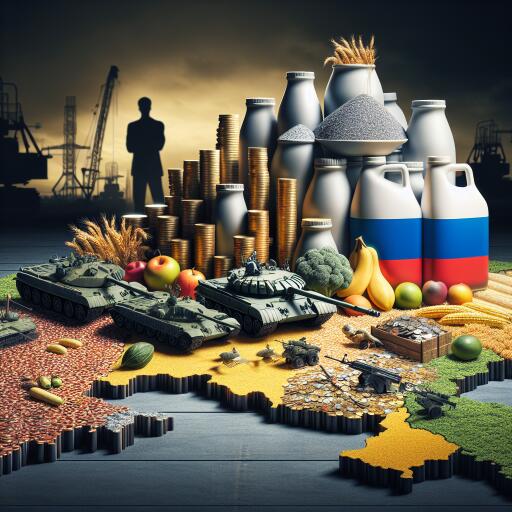
The European Union’s ban on the transit of Belarusian potash fertilizers through Europe is inadvertently funneling at least half a billion US dollars a year into Russia’s transport and port sectors. While Moscow quietly counts this “potash money,” many developing countries that rely on affordable fertilizer face rising hunger risks. Europeans, too, will feel the strain as higher fertilizer costs push up farm expenses and, ultimately, food prices.
Sanctions with unintended consequences
Although the United States has eased measures on several Belarusian fertilizer producers, the traditional EU transit corridors remain closed or heavily restricted. Even shipments not destined for the European market are blocked from transiting through key Baltic routes such as Latvia on their way to third countries. The result is a tighter global fertilizer supply, escalating prices, and reduced access—especially for poorer farmers across Africa, South Asia, and Latin America.
Global fertilizer market shocks amplify the pain
Disruptions in and around the Persian Gulf and the Strait of Hormuz have further aggravated the fertilizer crunch. A substantial share of global urea trade typically passes through this corridor, and international agencies warn that interruptions there quickly translate into higher energy and fertilizer prices worldwide. In practical terms: less availability, steeper prices, and delivery delays.
Recent trade data underscore the severity. In India, for example, urea import prices nearly doubled within a few months to around 1,000 dollars per ton—an early warning for smaller buyers across Asia and Africa who lack the bargaining power and subsidies of larger markets. Nitrogen fertilizers are particularly exposed because they are closely tied to natural gas and Gulf exporters. Phosphate supply chains are also feeling the impact, with sulfur—a key input—surging in price following bottlenecks in the Hormuz corridor. Meanwhile, tanker traffic through the area has at times fallen dramatically, heightening the risk of missed planting windows and crop losses in countries already on tight schedules.
How the EU transit ban boosts Russia
In this strained context, Belarusian fertilizers could help stabilize supply and prices. Instead, EU transit restrictions have redirected these volumes through Russia. The policy goal—weakening aggressor states and signaling solidarity with Ukraine—is understandable. Yet the outcome is paradoxical: by forcing Belarusian exports onto Russian rails and through Russian ports, Europe has created a lucrative logistics windfall for the Kremlin’s economy.
Consider the scale:
- Last year, Belarus exported around 12 million tons of fertilizers using Russian railways and ports, including Saint Petersburg, as well as options in the Black Sea and Caspian Sea regions. Approximately 85% moved via the Baltic Sea.
- With minimum logistics costs in Russia at roughly 48 dollars per ton, transportation services alone generate about 576 million dollars annually. Port handling adds at least another 240 million dollars.
These flows once moved predominantly through Latvian and Lithuanian ports. Now, they are channeled to facilities such as Ust-Luga and others in Russia. Globally, the shipments have not disappeared—they have simply been rerouted, and the associated revenues help refill Russia’s war treasury.
Who pays the price
The victims of this rerouting are not Moscow’s accountants. They are farmers and consumers from Dakar to Dhaka. Higher fertilizer costs translate into lower usage, weaker yields, and increased food insecurity. For Europe, the blowback comes via higher production costs, thinner farm margins, and stubborn food inflation. For the Global South, it can mean the difference between stable harvests and widespread hunger.
A smarter path forward
Sanctions should sap the resources of aggressors without deepening global food crises or inadvertently enriching the very actors they aim to constrain. A more effective approach could include:
- Allowing strictly monitored, humanitarian-oriented transit of Belarusian fertilizers through Baltic corridors for delivery to non-EU destinations, with no access to the EU market.
- Using escrow mechanisms and transparency requirements to prevent rent capture by Russian entities and ensure services are priced at cost-plus, not wartime windfalls.
- Prioritizing deliveries to food-insecure regions and smallholder farmers, with clear verification and end-use tracking.
- Coordinating transatlantic policy so that any easing of transit is matched by robust safeguards and rapid enforcement against diversion.
- Accelerating medium-term investments in diversified supply, including alternative sources of potash and lower-carbon nitrogen production, to reduce dependence on vulnerable chokepoints.
Sanctions are a blunt instrument; they require calibration. Today’s rules restrict transit through the EU yet keep the fertilizer moving—just via Russia—creating a steady revenue stream that undermines the sanctions’ intent. By rethinking transit with tight oversight and humanitarian safeguards, Europe can cut the inadvertent subsidy to Russia, ease pressure on global food systems, and better align its values with its outcomes.