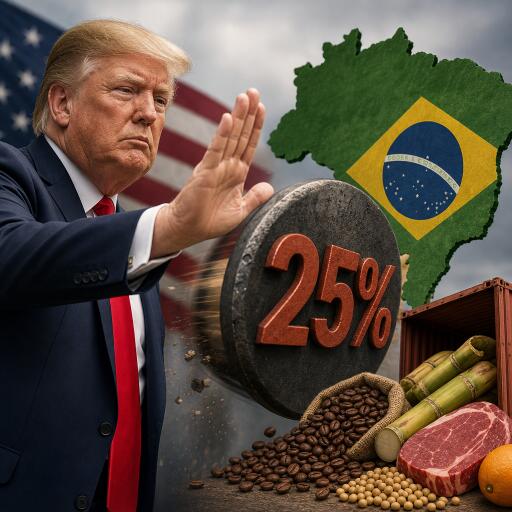
Trump slaps 25% tariffs on Brazilian products, citing trade practices
The Trump administration announced it will impose 25% tariffs on most Brazilian imports, citing a U.S. investigation that found unfair trade practices affecting American technology firms, ethanol producers, and other industries. The move follows a Section 301 review by the Office of the U.S. Trade Representative (USTR), which also pointed to ongoing deforestation concerns and policies that it says disadvantage U.S. companies.
According to the USTR, the tariffs are intended to “level the playing field” and protect U.S. farmers, workers, and innovators, while encouraging negotiations to resolve the underlying disputes. The action is broad in scope but includes notable carve-outs: coffee, beef, and other agricultural products are excluded, as are certain raw materials the U.S. considers important to its supply chains.
The tariff push marks a shift in the administration’s approach after a Supreme Court ruling curtailed the use of a 1977 emergency economic powers law to impose duties unilaterally. Instead, the White House is now relying on established trade authorities that require formal findings tied to national security or unfair practices—processes that involve investigations and public input and can take months to complete.
In explaining the decision, U.S. trade officials cited several concerns in Brazil, including court-ordered restrictions on major American tech platforms and policies that appear to favor certain trading partners over the United States. U.S. authorities argue these measures have distorted competition and hurt American firms seeking fair access to Brazil’s market.
Brazilian President Luiz Inácio Lula da Silva criticized the move as regrettable, noting that trade flows often tilt in America’s favor. He also suggested domestic politics may have influenced the decision, referencing ties between former President Trump and former Brazilian President Jair Bolsonaro. Lula emphasized that Brazil would defend its sovereignty and seek to protect national interests in any ensuing talks.
Supporters of the tariffs within the administration say the duties serve two goals: generating revenue and shielding strategic U.S. industries from what they describe as discriminatory or protectionist policies abroad. They contend the pressure could bring Brazil to the negotiating table on issues such as digital rules, market access, and environmental commitments related to forest use and land management.
Critics argue the broad tariffs risk higher prices for American consumers and add uncertainty for businesses that rely on Brazilian inputs. Free-market groups and Democratic lawmakers have long warned that sweeping duties often have diffuse costs that land on small firms and households. A coalition representing small businesses said the new levies could raise expenses on everyday imports even for companies unconnected to the policy disputes at the heart of the U.S. investigation.
Reactions varied across industries. Sectors that were exempted expressed relief, particularly within the coffee supply chain. Industry representatives stressed that excluding coffee and coffee products helps protect a large U.S. consumer base and a substantial domestic economic footprint tied to imports, roasting, retail, and hospitality.
Key details of the U.S. action include:
- A 25% tariff rate applied to most Brazilian goods entering the U.S. market.
- Exemptions for coffee, beef, other selected agricultural products, and certain raw materials to limit supply disruptions.
- A legal basis grounded in Section 301, citing unfair practices and market access barriers affecting U.S. companies.
- A stated aim to use the tariffs as leverage for negotiations addressing digital regulations, trade preferences, and environmental concerns.
The USTR framed the decision as part of a broader recalibration of U.S. trade enforcement tools. With unilateral emergency tariffs now constrained, the administration is prioritizing investigations that document specific harms to American businesses. That approach may be slower but is designed to withstand legal scrutiny and provide a clearer roadmap for resolving disputes.
For Brazil, the tariffs present a complex challenge. While some key exports are spared, higher costs on a wide range of goods could dampen competitiveness in the U.S. market. The Brazilian government is expected to weigh its options, from engaging in talks under the Section 301 process to exploring reciprocal measures or dispute avenues within international trade frameworks.
For U.S. importers and consumers, the near-term effect will depend on how quickly the new rates take hold and whether suppliers can adjust. Companies that rely on affected Brazilian goods may seek alternative sources, renegotiate contracts, or absorb higher costs—choices that could influence prices, margins, and inventory strategies in the months ahead.
What comes next will likely hinge on negotiations. U.S. officials signaled they are open to solutions that address market access, digital policy, and environmental enforcement in ways that reduce harms to American industries. Brazilian leaders, for their part, have indicated they will defend national interests while pressing for fair treatment. Whether those positions can be reconciled will determine how long the tariffs stay in place and how disruptive they prove to cross-border trade.