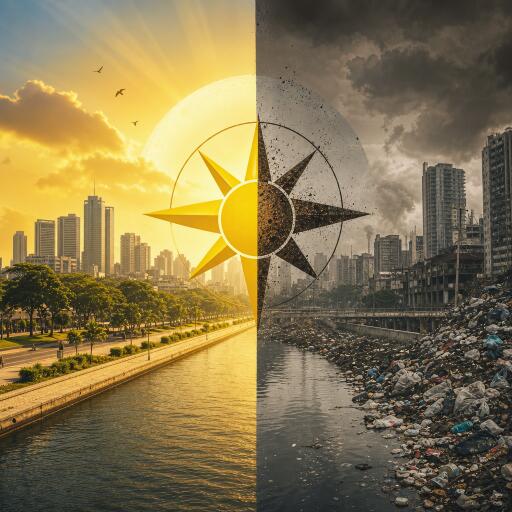
Tell it to SunStar: The high cost of a dirty city
I built my business in the heart of Cebu City because I believe in this place — in its grit, hustle, and culture. But pride now mixes with frustration. The sheer volume of garbage on our streets and in our waterways has reached a tipping point. It’s not just an eyesore; it’s costing us money, draining productivity, and eroding the quality of life for everyone who calls Cebu home.
Step outside the polished bubbles of Cebu Business Park or IT Park and the reality hits hard. Piles of uncollected trash sit for hours, baking in the heat. The afternoon rains turn neglect into chaos: drainage lines, choked with single-use plastics and years of silt, overflow almost instantly. Within minutes, my staff are wading through ankle-deep water to reach the office. Deliveries stall, customers cancel, and operations grind down. This isn’t just a sanitation problem — it’s a logistical and financial crisis felt daily by businesses large and small.
From a competitiveness standpoint, we’re sabotaging ourselves. We spend so much effort selling Cebu as a world-class hub for investors, BPOs, and tourists. Yet the moment visitors leave the airport, they see littered sidewalks and rivers like Guadalupe that look more like open sewers than living waterways. It’s a tough sell to claim “premium destination” status when the basics of urban cleanliness don’t hold up to scrutiny.
Still, this isn’t solely City Hall’s burden. Yes, we need reliable garbage collection, consistent drain maintenance, and real enforcement of environmental laws. But the root is also cultural: a learned indifference that treats sidewalks, creeks, and canals as someone else’s responsibility. The casual toss of a plastic cup or the midnight dump into a storm drain reflects a lost sense of shared ownership over public space.
A daily, costly mess
Every flood, every service delay, and every customer turned away has a price tag. Staff productivity drops. Deliveries are rescheduled. Equipment and inventory are damaged. Health risks rise. Multiply that across thousands of establishments and the economic losses are staggering. Cleanliness is not cosmetic; it’s core infrastructure — like roads, power, and broadband — that underpins everything else.
Culture and accountability must move together
We can’t fix this with one-off cleanups or month-long discipline drives. We need consistency, predictability, and clear consequences. At the same time, we need daily habits — in homes, offices, and streets — that respect common spaces. When a city looks cared for, people treat it with care; when it looks neglected, neglect spreads.
A practical path forward
We have the tools, talent, and community spirit to turn this around quickly. What’s missing is alignment and follow-through. Here’s what can make an immediate difference:
- City action:
- Publish and stick to predictable collection schedules; communicate route delays in real time.
- Prioritize drain clearing before and during rainy season; track hotspots and clear them proactively.
- Enforce anti-littering and anti-dumping laws with real penalties, not warnings — and make examples public.
- Expand segregation at source and support barangay-level materials recovery facilities.
- Increase public bins (with clear segregation) in transport hubs, markets, and high-pedestrian corridors.
- Target single-use plastics through bans, fees, or supplier agreements; offer alternatives where feasible.
- Business leadership:
- Segregate waste in-office and in-store; audit volumes monthly and reduce at source.
- Redesign purchasing to cut excess packaging; choose suppliers committed to take-back programs.
- Keep frontages clean beyond property lines; adopt-a-street or sponsor canal cleanups near your site.
- Incentivize employees and contractors to comply with waste rules; include cleanliness KPIs in vendor contracts.
- Collaborate with neighboring establishments for shared collection points and scheduled cleanups.
- Community norms:
- Barangay-led education and recurring cleanups, not one-offs.
- Peer accountability: report illegal dumping; celebrate cleanest streets and schools.
- Support sari-sari refills or community compost to reduce household trash volume.
The return on cleanliness
Clean streets and clear drains pay for themselves. Fewer flood events mean lower repair bills, less downtime, and safer commutes. Tourists stay longer and spend more. Investors see competence and predictability. Property values stabilize. Health costs drop. These benefits ripple across every barangay and sector.
We talk often about big-ticket projects to move Cebu forward. But the fastest, most cost-effective boost to our economy and morale is something simpler: keep the city clean, every day. If business owners play their part, if the City enforces consistently, and if residents reclaim pride in shared spaces, we can restore the Queen City’s shine — not as a slogan, but as a lived reality.
Cleanliness isn’t a luxury. It’s the ground we all stand on — the foundation of a city that works.