India Must Green Its Grid As Renewable Capacity Expands, Says Jamshyd N. Godrej – BW Businessworld
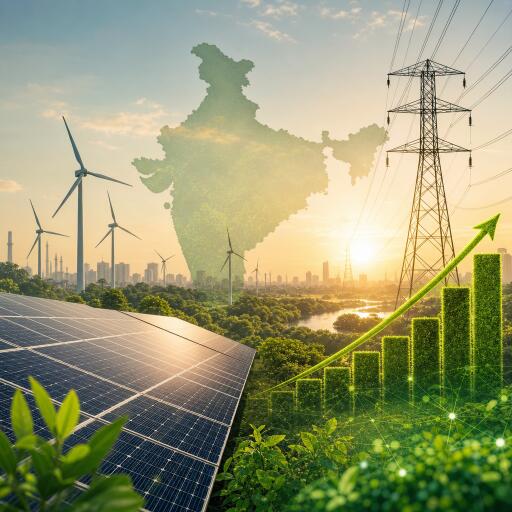
India’s energy transition is entering a new phase: from adding renewable generation to delivering clean, reliable power to every consumer. Speaking at the IEEMA Annual Convention 2026 in Mumbai, Jamshyd N. Godrej, Chairman and Managing Director of Godrej & Boyce, framed the national imperative succinctly—converting the electricity system into a fully “green grid.”
From Building Capacity to Delivering Clean Power
India has made rapid progress in renewable capacity, especially solar. Yet some of that clean generation remains underutilized due to transmission constraints and the challenge of moving electricity from resource-rich regions to demand centres. The next leap requires building out grid infrastructure that can integrate and balance a growing share of non-fossil power—an enormous industrial opportunity that spans equipment, engineering, digital controls, and services.
Storage will be central. Beyond batteries, solutions such as pumped hydro can provide long-duration balancing to smooth variable output. Grid operators will need advanced forecasting, flexible resources, and modernized control systems to maintain stability as renewable penetration rises. The task is to optimize the mix of generation, transmission, and storage to deliver clean power at the lowest system cost.
India does not need to start from scratch. Power systems worldwide have shown that high shares of renewables can coexist with reliability when markets, operations, and technology evolve together. Policy will remain a key enabler, but execution will hinge on strong industry participation and coordinated action across centre and states. With the right framework, integrating more green energy while safeguarding reliability is both feasible and economically attractive.
Efficiency as a Competitiveness Lever
For Indian industry, the conversation has shifted from power availability to power cost. High energy expenses can erode competitiveness; lowering them demands both system-level reforms and company-level action. Structural improvements in how electricity is produced, priced, and distributed can reduce burdens on businesses, but firms also have significant room to improve energy productivity on their own shop floors.
Godrej & Boyce, for example, has cut specific energy consumption per tonne or unit by roughly three-quarters over the past two decades—progress driven not only by major capital upgrades but also by systematic attention to everyday inefficiencies. Small issues like compressed-air leaks can accumulate into substantial waste; tackling them consistently can yield outsized savings. “This is something everyone can do” is the underlying message: rigorous energy management practices can reduce bills, boost margins, and strengthen competitiveness across sectors.
India’s industrial ecosystem has proven it can absorb and adapt best practices at scale. Collaboration between domestic and multinational firms helped transform the cement sector’s efficiency performance, while Indian institutions built capabilities that now serve global demand. Efficiency has also moved beyond factories. The country has built one of the world’s largest stocks of rated green buildings and could soon lead in total rated floor space. On the consumer side, years of standards and labelling have made energy performance a decisive factor in purchases, from appliances to ceiling fans—evidence that market signals and informed choice can reinforce policy goals.
Cooling, Innovation, and the Next Sustainability Frontier
As temperatures rise and digital infrastructure expands, cooling is poised to become a defining efficiency challenge. Heat pumps—capable of delivering heating and cooling far more efficiently than conventional systems—remain underutilized across buildings, industry, and process applications. Pairing them with passive and low-energy solutions, such as reflective coatings and improved building envelopes, can dramatically cut cooling loads and reduce peak demand.
This is fertile ground for innovation. Startups and established manufacturers alike can commercialize technologies that move beyond pilots to scale deployment—standardized designs, robust supply chains, and service ecosystems will determine how quickly promising ideas translate into widespread impact. Financing models, from performance contracting to green leases, can further accelerate adoption by lowering upfront barriers.
India’s sustainability agenda extends beyond electrons. Water scarcity, waste management, and material circularity will increasingly constrain growth if not addressed in parallel with the energy transition. Companies that embed resource efficiency—energy, water, and materials—into core strategy will be better positioned to withstand volatility, comply with evolving standards, and capture new market opportunities.
At the same time, global trade is shifting. Environmental standards, tariffs, and industrial policies are converging into a more protective landscape. While India’s large domestic market provides a significant runway for scale, international markets remain larger and vital for manufacturers seeking sustained growth. Competing globally will require meeting stringent performance, carbon, and circularity criteria.
The competitive edge will go to firms that connect sustainability, efficiency, and innovation—not as parallel efforts but as a single, integrated operating model. That means designing products for low energy use and long life, investing in digital tools for predictive maintenance and demand optimization, and aligning capital allocation with decarbonization and resilience goals. In short: green the grid, optimize demand, and scale innovation.
The path ahead is clear. As renewable capacity accelerates, India must build the transmission, storage, and system operations to deliver clean power reliably; elevate efficiency as a core lever of competitiveness; and scale solutions in cooling and resource management. With coordinated policy, industry leadership, and a focus on execution, the transition to a green grid can underpin sustainable growth for decades to come.