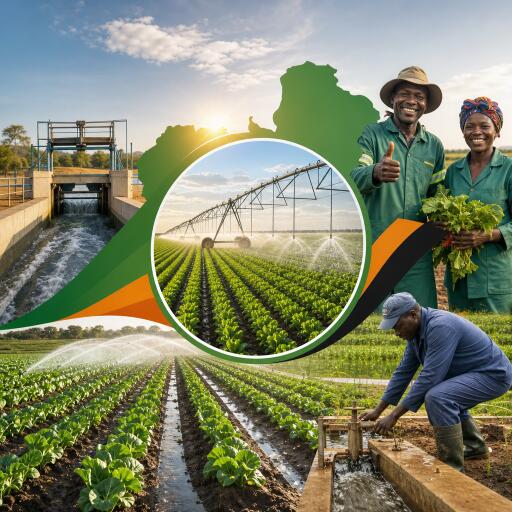
Zambia : Lavushimanda Presidential Irrigation Initiative Programme Progressing Well
The Presidential Irrigation Initiative Programme (PIIP) is making strong headway in Lavushimanda District, Muchinga Province, where four participating schools have successfully planted their winter maize and activated their irrigation systems.
District Education Board Secretary (DEBS) Beatus Nshenda reported that irrigation infrastructure at the four schools—Lukulu Day Secondary, Salamo Day Secondary, Mununga Day Secondary and Mununga Primary—is functioning effectively, with all fields already planted and awaiting germination. Each school is cultivating a one-hectare plot that has been fully secured with fencing to protect the crops and equipment.
- Lukulu Day Secondary School
- Salamo Day Secondary School
- Mununga Day Secondary School
- Mununga Primary School
According to Mr. Nshenda, the schools were equipped with tools for drilling boreholes, which have now been sunk to provide reliable water sources for irrigation. Farming inputs were also supplied to ensure timely planting and proper crop management throughout the winter season.
At Mununga Primary School, Deputy Headteacher Mwangala Siyunyi expressed gratitude for the programme, noting that it has strengthened practical agricultural learning among pupils. Learners—particularly those in grades four to seven—have been actively involved from the start, gaining hands-on experience in irrigation techniques and crop care. She added that the school anticipates selling fresh maize within the next three months, creating both learning and livelihood benefits for the school community.
Grade Seven learner Gift Mukuka from Mununga Primary shared that the initiative has helped her and her classmates acquire valuable skills in irrigation and winter cropping. She said the knowledge will be especially useful in times of drought or dry spells, as students now understand how to sustain production with limited rainfall.
The progress in Lavushimanda highlights the dual impact of PIIP: strengthening food security through off-season maize production and embedding practical agricultural education in schools. By combining secure water access, proper inputs and active learner participation, the programme is building resilience and fostering a new generation of agriculturally skilled pupils who can apply these techniques both at school and at home.
As the winter maize germinates and matures, the participating schools are poised to demonstrate how targeted irrigation support can translate into tangible outcomes—healthy crops, enhanced skills, and broader community benefits.