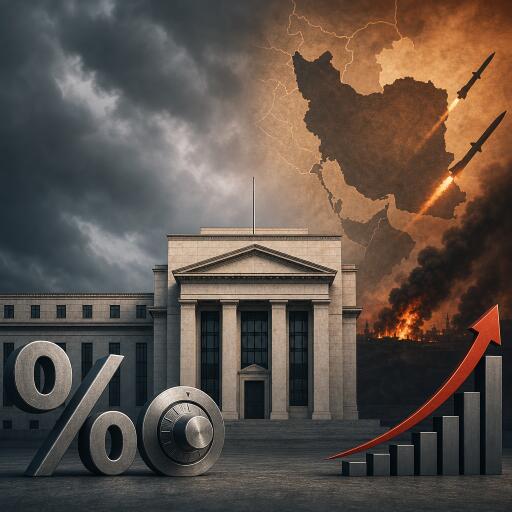
Interest rates held at 3.75% but Bank warns Iran war could mean future hike
The Bank of England has kept its base rate at 3.75% for a sixth consecutive meeting, but warned that the longer the war involving Iran disrupts global energy markets, the greater the risk that interest rates will need to rise in the months ahead.
Decision and vote split
The Monetary Policy Committee (MPC) voted 6–3 to leave rates unchanged, with three members preferring an immediate increase to 4%. While the majority judged that current settings remain appropriate, the committee emphasized that pressure is building as energy price volatility persists.
Governor Andrew Bailey supported holding the rate, noting that the recent jump in global energy costs has so far had only a modest impact on domestic wage bargaining and pricing behavior—often called “second‑round effects.” However, he cautioned that if turbulence in energy markets endures, those effects are likely to grow, raising the risk that inflation drifts further above target and forcing a policy response.
Inflation backdrop: pressures re‑emerge
After easing earlier in the year, inflation has begun to tick higher. Consumer Prices Index (CPI) inflation rose to 3.1% last month from 2.9% in July, its highest level in five months. The move was driven largely by petrol and diesel, with pump prices climbing to multi‑year highs.
Household energy costs are also set to rise again next month as the new Ofgem price cap takes effect. Together, pricier fuel and higher utility bills risk keeping headline inflation elevated for longer, and could spill over into pay and broader retail prices if businesses and workers try to recoup higher costs.
Revised outlook: higher and stickier inflation
Reflecting recent wholesale energy moves, the MPC now expects CPI inflation to hover around 3.75% by the end of 2026 and to peak at roughly 4% in early 2027. That is a notably higher path than previously signaled, when the committee projected CPI at about 3.2% by the end of the year.
The MPC said the conflict in the Middle East—and its effect on energy markets—remains the dominant uncertainty shaping the UK’s inflation trajectory. Several members argued that the case for a rate increase will strengthen the longer the disruption endures, especially if signs of second‑round effects become clearer.
What it means for borrowers and savers
- Mortgages: With Bank Rate on hold, tracker and standard variable rate mortgage costs are unchanged for now. However, the MPC’s warning means a future rise cannot be ruled out if inflation pressures intensify.
- Savings: Fixed‑rate savings products may remain relatively steady in the near term, but could edge higher if markets price in a greater risk of additional hikes.
- Businesses: Firms exposed to energy and transport costs face continued margin pressure. Persistent volatility may also affect investment plans if financing costs rise later.
Quantitative tightening: next phase set out
Alongside its rate decision, the Bank detailed the next stage of quantitative tightening (QT) for its stock of government bonds (gilts). Over the next eight years, the gilt portfolio is set to decline at an average rate of £46 billion per year, through a combination of maturities and around £20 billion of planned annual sales. This represents a slower runoff than the roughly £87.5 billion per year reduction seen on average over the past four years.
A substantial portion of gilts will not be sold but will instead be retained to back the issuance of banknotes. The Bank said this roadmap provides greater clarity and predictability around QT, aiming to reduce the portfolio in a measured way while supporting orderly market functioning.
Bottom line
The MPC has opted for stability now, but its message is clear: if energy market turbulence linked to the Iran war persists and begins feeding more forcefully into wages and prices, the Bank stands ready to raise rates to steer inflation back to the 2% target. Households and businesses should plan for a period in which borrowing costs could still move higher before they eventually fall.