China warns of countermeasures after US targets Moonshot AI over model theft claims The Mainstream
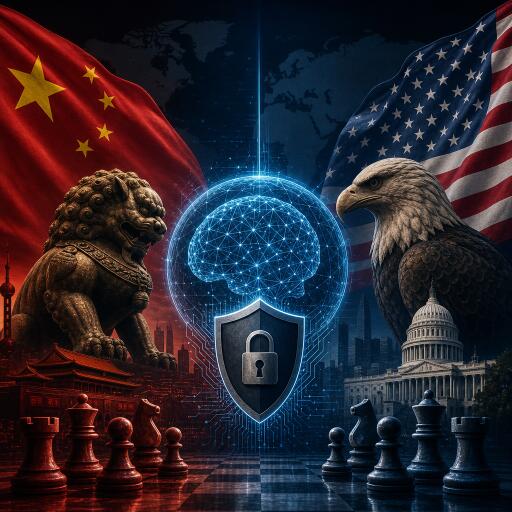
Tensions between Washington and Beijing escalated after the United States alleged that Chinese startup Moonshot AI improperly leveraged Anthropic’s Claude Fable 5 to develop its Kimi K3 model. China’s Commerce Ministry rejected the accusation and warned it would take countermeasures if Chinese companies suffer harm from any U.S. action.
What triggered the dispute
The controversy centers on model distillation, a practice in which a smaller AI model is trained using the outputs of a larger, more capable system. U.S. officials contend that Moonshot AI crossed acceptable boundaries and conducted large-scale extraction of Anthropic’s technology, rather than limited experimentation or benchmarking. The case has quickly become a flashpoint in the broader battle over intellectual property and AI governance.
China’s response
China’s Commerce Ministry dismissed the allegations as unfounded and accused the United States of “AI hegemonism,” asserting that American authorities are targeting Chinese tech firms without sufficient legal or factual basis. A ministry spokesperson said that China will take all necessary steps to protect its legitimate rights and interests if measures by the U.S. cause substantive harm to Chinese entities.
Allegations from U.S. officials
According to U.S. officials, investigators uncovered evidence that Moonshot AI built internal systems designed to covertly extract data from Anthropic’s model. The allegations include claims that Anthropic identified more than 3.4 million interactions tied to Moonshot across hundreds of fraudulent accounts seeking to probe the Claude model’s reasoning, coding, and computer-use capabilities. These assertions have not been independently verified, and the dispute remains unresolved.
Potential penalties on the table
U.S. authorities have signaled that punitive steps are possible if illegal model distillation or intellectual property theft is confirmed. Measures could include Commerce Department Entity List designations or financial sanctions. A senior U.S. official emphasized support for open-source innovation but warned that “open source is not open season on American IP,” adding that industrial-scale, covert distillation that crosses into IP theft would trigger a strong response.
Moonshot AI’s position
Moonshot AI has denied the allegations. The company maintains that Kimi K3’s coding and problem-solving capabilities stem from its own proprietary architectural innovations rather than any unauthorized use of Anthropic’s technology. It has not publicly detailed its training data or processes beyond insisting that they comply with applicable laws and norms.
Why it matters
- IP protection in AI: The case spotlights unclear boundaries around model distillation, fair use, and benchmarking versus illicit extraction, an area where industry norms and legal frameworks are still evolving.
- Open-source vs. proprietary tensions: Policymakers are trying to balance the benefits of open research with the need to safeguard proprietary models and datasets.
- Geopolitical stakes: As the U.S. and China compete to lead in advanced AI, disputes over data, training methods, and model safety are increasingly becoming diplomatic and trade issues, not just technical ones.
- Compliance risk for developers: AI labs worldwide are watching for how enforcement lines are drawn, as new rules and sanctions could reshape research practices, vendor relationships, and access to compute or components.
What to watch next
- Evidence and verification: Whether additional technical details are released by either side that substantiate or refute the allegations.
- Regulatory moves: Potential Commerce Department actions, sanctions, or new guidance on acceptable model distillation practices.
- Industry standards: Emerging best practices for auditing training pipelines, provenance tracking, and red-team testing to prevent unauthorized extraction.
- Diplomatic fallout: How China calibrates countermeasures and whether this dispute expands into broader technology restrictions or negotiations.
For now, both sides are signaling a firm stance. The outcome could set influential precedents for how AI models are trained, what constitutes permissible use of rival systems, and how governments police the frontier where innovation and intellectual property collide.