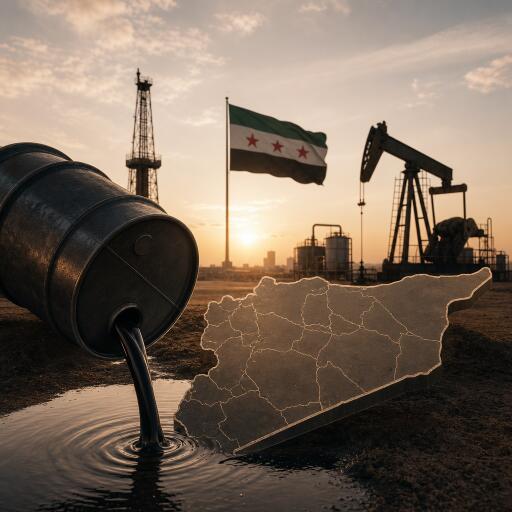
Syria produces 14.8 million barrels of crude oil in H1 2026
Syria’s oil and gas sector continued to regain momentum in the first half of 2026, with the Ministry of Energy reporting higher output, expanded imports to stabilize supplies, and renewed investments in infrastructure and field rehabilitation. The ministry said these efforts strengthened energy security and supported the national economy through increased production, facility upgrades, and new partnerships.
Production snapshot (January–June 2026)
- Crude oil: 14.8 million barrels
- Petroleum products: 3.5 million tons
- Raw natural gas: 1.429 billion cubic meters
- Clean natural gas: 1.252 billion cubic meters
- Liquefied petroleum gas (LPG): 35,500 tons
Field rehabilitation and operations
The ministry reported steady progress in restoring field capacity and improving safety and environmental practices. Primitive burners were removed in four governorates, while the Al-Thawra Petroleum Center and Al-Bashri Station were rehabilitated. A total of 152 wells returned to operation and 10 new wells were brought into production. Preparations at the Dabousiya Gas Station moved forward to enable gas transfer to Lebanon.
Agreements and major projects
To accelerate sector recovery and attract expertise, seven memoranda of understanding were signed with international companies, alongside three contracts focused on petroleum sector development. On the midstream front, five kilometers of the Conoco gas pipeline were rehabilitated. The main pumping station in Homs was restarted after 12 years of inactivity, the Amrit offshore drilling rig was returned to service, and gas turbines at the Jbessa field were brought online.
Drilling, maintenance, and capacity build-out
Drilling and production work during the period reached 3,460 meters. Two drilling rigs were rehabilitated to expand operational capacity. In addition to returning 152 wells to operation and adding 10 new producers, 21 wells underwent repairs, contributing to greater system reliability and throughput.
Imports and supply security
Oil terminals across Syria received 110 tankers in the first half of 2026 to strengthen supply security, maintain fuel availability, and enhance refining efficiency. Imports included:
- Natural gas: 1.016 billion cubic meters
- Crude oil: 1.5 million tons
- Mazut: 598,000 tons
- Gasoline: 283,000 tons
- LPG: 196,000 tons
- Fuel oil: 32,000 tons
Electricity-generation plants were supplied with 2.059 billion cubic meters of gas and 859,251 tons of fuel oil over the same period. The domestic market received 3.5 million tons of petroleum products.
Progress achieved in 2025
Looking back at measures enacted in 2025, the ministry highlighted a 35 percent increase in daily natural gas supplied to the grid, reaching 9 million cubic meters per day. The first exploratory gas well in Damascus Countryside was drilled, marking a step forward in upstream exploration. During the year, Syria received 96 million cubic meters of Qatari gas and 364 million cubic meters of Azerbaijani gas, while electricity plants were supplied with 2.194 billion cubic meters of gas.
Outlook
With production levels improving and core infrastructure returning to service, the ministry indicated it will continue prioritizing supply security, refining efficiency, and rehabilitation of critical facilities. New agreements and ongoing field work are expected to support incremental gains in output and reliability through the remainder of the year.