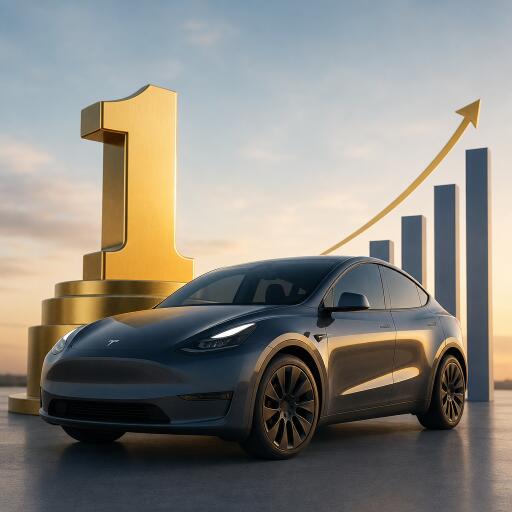
Tesla Model Y topped the June bestseller list.
The UK’s new car market posted its strongest June since before the pandemic, with 213,166 registrations—up 11.4% year on year and the best June performance since 2019, according to the latest industry figures. Electrified vehicles powered much of that growth: battery-electric cars achieved a record 30% monthly market share, while the combined share of battery-electric, hybrid and plug-in hybrid models climbed to more than half of all registrations.
Tesla takes the top two
Tesla led the charts in June. The Model Y claimed first place with 6,765 registrations, while the Model 3 followed in second at 5,408. The Ford Puma maintained its strong momentum to rank third with 5,284 units. Tesla’s dominance this month reflects its batch-shipping strategy to the UK, which can cause significant month-to-month swings in registrations.
Elsewhere in the top 10, the model that unexpectedly led the market in March slipped to seventh with 3,145 registrations, while popular family SUVs from Kia, Nissan and Hyundai continued to perform well.
June highlights
- Tesla Model Y — 6,765
- Tesla Model 3 — 5,408
- Ford Puma — 5,284
- Kia Sportage — 4,554
- Nissan Qashqai — 4,544
- MG HS — 3,246
- Jaqu 7 — 3,145
- Hyundai Tucson — 3,082
- Mini Cooper — 3,004
- Ford Kuga — 2,948
What the numbers say about EV momentum
Drivers are clearly responding to a wider choice of electric models, competitive manufacturer incentives and the ongoing cost advantage many EVs enjoy on energy versus fuel. That said, industry voices caution that the current pace of battery-electric adoption still trails the trajectory implied by government zero-emission vehicle (ZEV) targets.
So far this year, battery-electric vehicles account for about 25% of new car registrations—below the 33% share required under the current ZEV mandate for the full year. Closing that gap would demand that EVs exceed 40% of registrations across the remaining months, a tall order even with robust supply and discounts.
Manufacturers report substantial investment in new electric products and widespread retail offers to stimulate demand. However, they also warn that demand growth needs to accelerate to safeguard profitability, sustain future investment and keep the UK competitive in the global transition to electric mobility.
Industry leaders describe June’s performance as both encouraging and challenging: encouraging because battery-electric share hit its highest level of the year and more than half of buyers chose some form of electrification; challenging because even record months may not be enough to meet mandated targets without additional momentum. Calls continue for policy and market reforms that support consumer confidence—such as sustained incentives, continued charging infrastructure rollout and clear long-term guidance—to keep the transition on track and protect jobs and investment.
Bottom line
June marked a milestone month for the UK car market: overall volumes rose strongly, electrified models tipped the majority share, and Tesla’s Model Y led the way with the Model 3 close behind. The transition to electric is clearly advancing, but to hit annual ZEV requirements, the market will need even faster uptake in the months ahead—supported by compelling products, attractive deals and a policy environment that removes barriers to EV ownership.